October 27, 2026
・
12
mins read
.png)

The May 2026 supply chain compromise of Instructure’s Canvas Learning Management System (LMS) by the ShinyHunters syndicate served as a definitive indictment of the prevailing perimeter-centric cyber defence model, including in UK higher education. Affecting more than 8,800 educational providers globally, the breach did not rely on a highly complex zero-day exploit deployed against institutional firewalls; rather, it exploited weaker authentication protocols within freemium "Free-for-Teacher" tiers hosted on shared back-end infrastructure. When the breach exposed student names, email addresses, student ID numbers, and private messages across these institutions, including some of the UK's most prominent universities, the incident revealed a harsh operational reality. A university’s risk posture is no longer governed by the efficacy of its internal Information Security controls, but by the multi-tenant cloud architecture and downstream sub-processors of its trusted third-party software providers.
According to the UK Government’s Cyber Security Breaches Survey 2025/2026, 98% of UK higher education providers suffered a cyber incident over the preceding twelve months, with nearly 30% countering targeted assaults on a weekly basis. This high volume of exposure is not the result of any security oversights, but the unavoidable consequence of the inherent and laudable mission of higher education institutions. Universities are intentionally engineered as open, global knowledge commons designed to facilitate borderless academic collaboration; their digital perimeters are thus fundamentally porous, however, supporting tens of thousands of students’ personal devices (BYOD) alongside international research networks. When an enterprise requires radical openness to function, traditional static perimeter defence becomes obsolete, leaving the software supply chain as a vulnerable way into universities’ own networks.
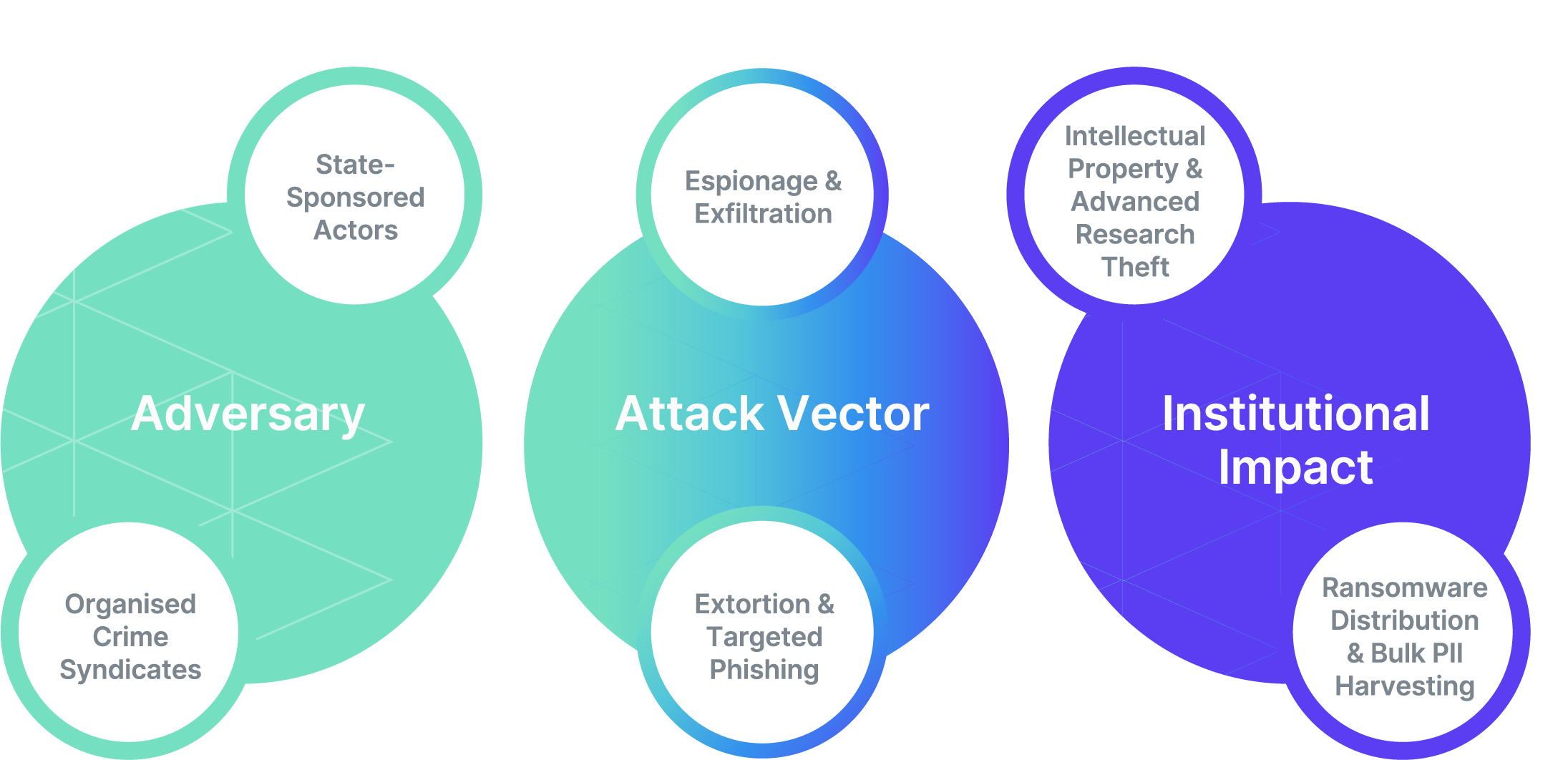
The exploitation of this attack pathway is increasingly driven by two sophisticated types of threat actors. In its sectoral threat assessment, the National Cyber Security Centre (NCSC) explicitly differentiates the higher education risk matrix into state-sponsored espionage and financially motivated extortion. Nation-state adversaries utilise the porous academic perimeter to exfiltrate advanced dual-use defence data, unpatented clean-energy engineering, and cutting-edge intellectual property long before these can reach commercial or public sector application. Conversely, organised cyber crime syndicates bypass secure email gateways by weaponising trusted third-party collaboration tools to deploy targeted ransomware timed specifically to hit during high-intensity periods, such as during summer clearing, autumn enrollment or exam period. For both adversaries, the software vendor ecosystem represents the path of least resistance: compromising a single third-party utility grants high-privilege, persistent access to the personal data and intellectual property of dozens of universities simultaneously.
Countering this dual-vector threat requires a volume of administrative due diligence that severely outstrips current institutional capacity. UK universities operate an immense digital footprint, routinely maintaining between 500 and 4,000 active supplier relationships concurrently while onboarding an average of 1,200 new vendors annually. This rapid intake occurs in an environment of acute macroeconomic distress; the sector faces real-terms declines in unit-of-resource funding alongside an accumulated technical legacy debt estimated by Jisc to stand at between £2bn and £4.7bn. When security leaders are forced to protect an expanding external software and third-party ecosystem using shrinking operational budgets and manual, point-in-time risk assessment spreadsheets, the institutional defence apparatus experiences structural failure. Solving the higher education supply chain paradox therefore requires abandoning the manual, reactive and bilateral risk management paradigm entirely in favour of an active, collective supply chain network defence model. This guide has been written to present a practical way forward for University security and risk management teams.
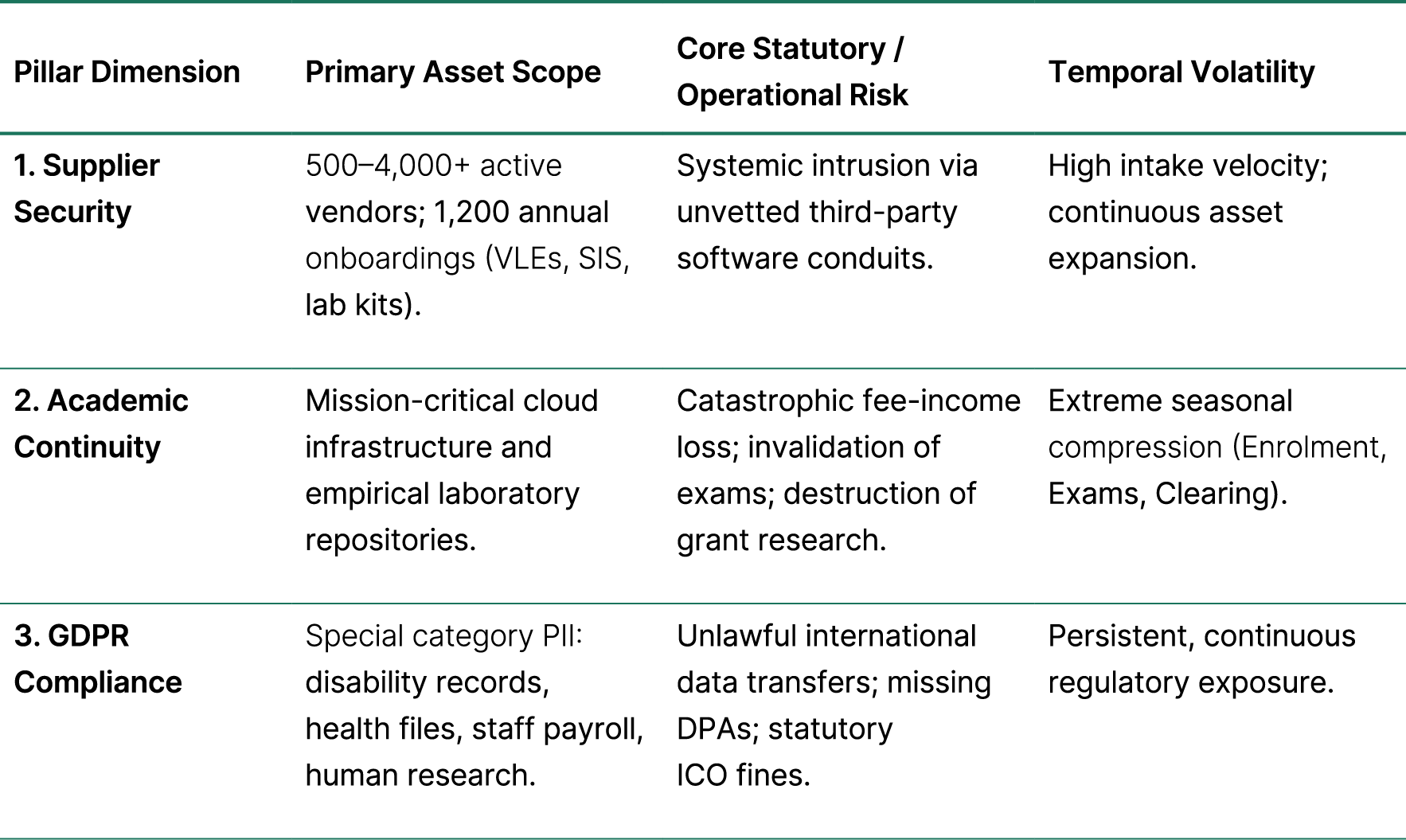
The failure of legacy third-party risk management stems from the persistent flaw of treating a university’s software inventory as a conventional corporate asset register. In commercial enterprises, IT architectures are fundamentally centralised; on a university campus, it is a distributed, semi-autonomous matrix governed by three structural dimensions. Every UK Higher Education institution is legally, financially, and operationally bound to protect this core estate across three co-equal pillars: Supplier Security, GDPR Compliance, and Academic Continuity. These pillars represent the baseline operational realities within which any viable cyber defence system must function.
The modern campus perimeter has dissolved into an expansive, non-linear web of third-party dependencies. Because UK universities operate as a loose federation of often highly autonomous schools, research institutes, and administrative directorates, central Information Security teams are tasked with defending an operational footprint of staggering diversity. This ecosystem ranges from foundational, high-availability enterprise platforms — such as campus-wide Virtual Learning Environments (VLEs) and Student Information Systems (SIS) — down to highly specialised laboratory data analytics tools and decentralised facilities management platforms.
The scale of this distributed perimeter creates an immediate operational bottleneck. As already alluded to, UK universities routinely manage between 500 and over 4,000 active vendors annually, introducing an onboarding velocity of roughly 1,200 new suppliers every single year. Consequently, the attack surface is not a fixed boundary that can be hardened behind an institutional firewall, but an ever-shifting amalgamation of external software and digital services assets. Every newly onboarded departmental SaaS tool or cloud-hosted research repository represents an active extension of the university’s logical perimeter into a third-party.
This massive volume of un-containable external assets does not merely provide additional telemetry; its core institutional utility is the continuous ingestion, processing, and holding of complex datasets.
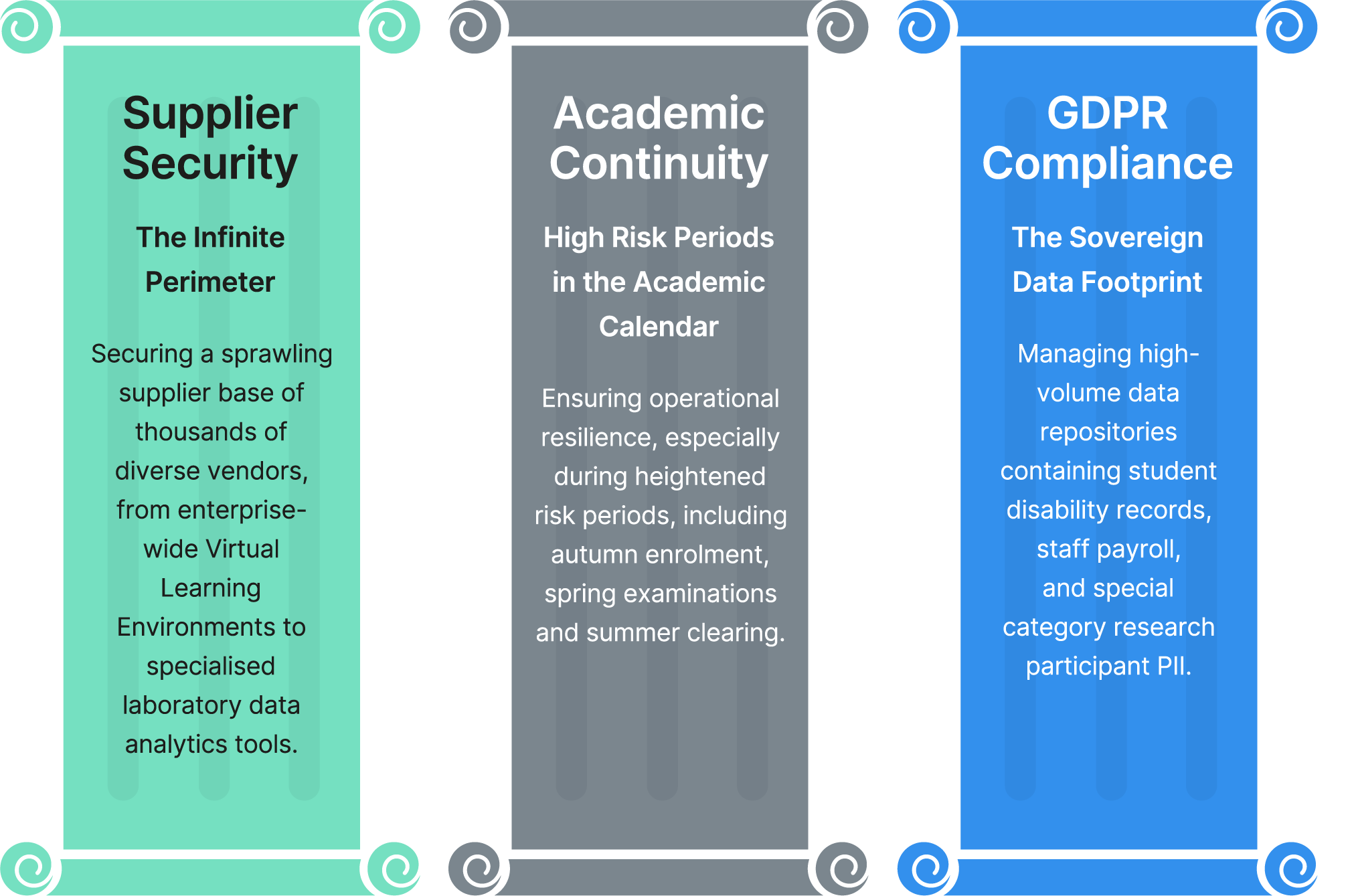
In a standard commercial enterprise, the risk associated with third-party software failure is quantified, for example, through an hour of unexpected downtime that equates to a predictable amount of lost commercial output. In Higher Education, third-party operational risk is inextricably bound to the compressed, non-negotiable milestones of the academic calendar. The institutional operating model and the pressures it faces is highly contingent on the exact week of the year.
A vendor outage that is practically negligible in May can prove fatal to institutional stability in August. Software utility and institutional survival are tied directly to fixed, highly sensitive operational windows:
Within this distributed software architecture, the university functions as an ultra-high-volume data controller subject to intense statutory scrutiny. The data footprint managed by UK institutions contains exceptionally rich caches of Personally Identifiable Information (PII) and special category data. This repository spans detailed undergraduate and postgraduate academic records, staff payroll and background verification files, complex student disability accommodations, campus health records, and highly sensitive human research participant data.
Because third-party cloud and SaaS applications are deeply woven into the fabric of teaching and administration, institutions routinely grant access to this sensitive data to hundreds of external, interconnected sub-processors. This technical reality triggers strict, non-negotiable legal obligations under UK GDPR regarding data controller-processor relationships, stringent Data Processing Agreements (DPAs), and absolute data residency verification. If an Nth-party sub-processor (a supplier of a supplier etc) unlawfully transfers special category human research data outside the UK jurisdiction, the university continues to bear the primary legal, financial, and reputational liability.
However, the statutory duty to protect this sovereign data footprint does not exist in an operational vacuum. The exposure, utility, and systemic criticality of this data fluctuate violently according to the strict, unyielding chronology of the academic year.
The operational and statutory mandates imposed by the three pillars inevitably collide with the often mechanical realities of public-sector procurement processes. Because UK universities are publicly accountable bodies subject to strict public spending directives, their procurement directorates must reconcile the rigorous due diligence required to protect the overall university estate with the intense internal pressure for the timely onboarding of new tools and software. In attempting to bridge this gap, institutions rely on a complex network of purchasing consortia and international assessment toolkits. However, utilising foreign compliance standards is insufficient given domestic compliance standard variations and pressures.
Software procurement within UK Higher Education is strictly regulated by public spending legislation, forcing central administration to maintain rigid intake controls. The standard acquisition workflow begins with a decentralised request: when an academic faculty or departmental research group identifies a software tool, central IT initially acts as the primary operational gatekeeper. Central IT executes a structural "bloat check" to determine whether the institution already holds pre-existing enterprise licences for functionally similar platforms.
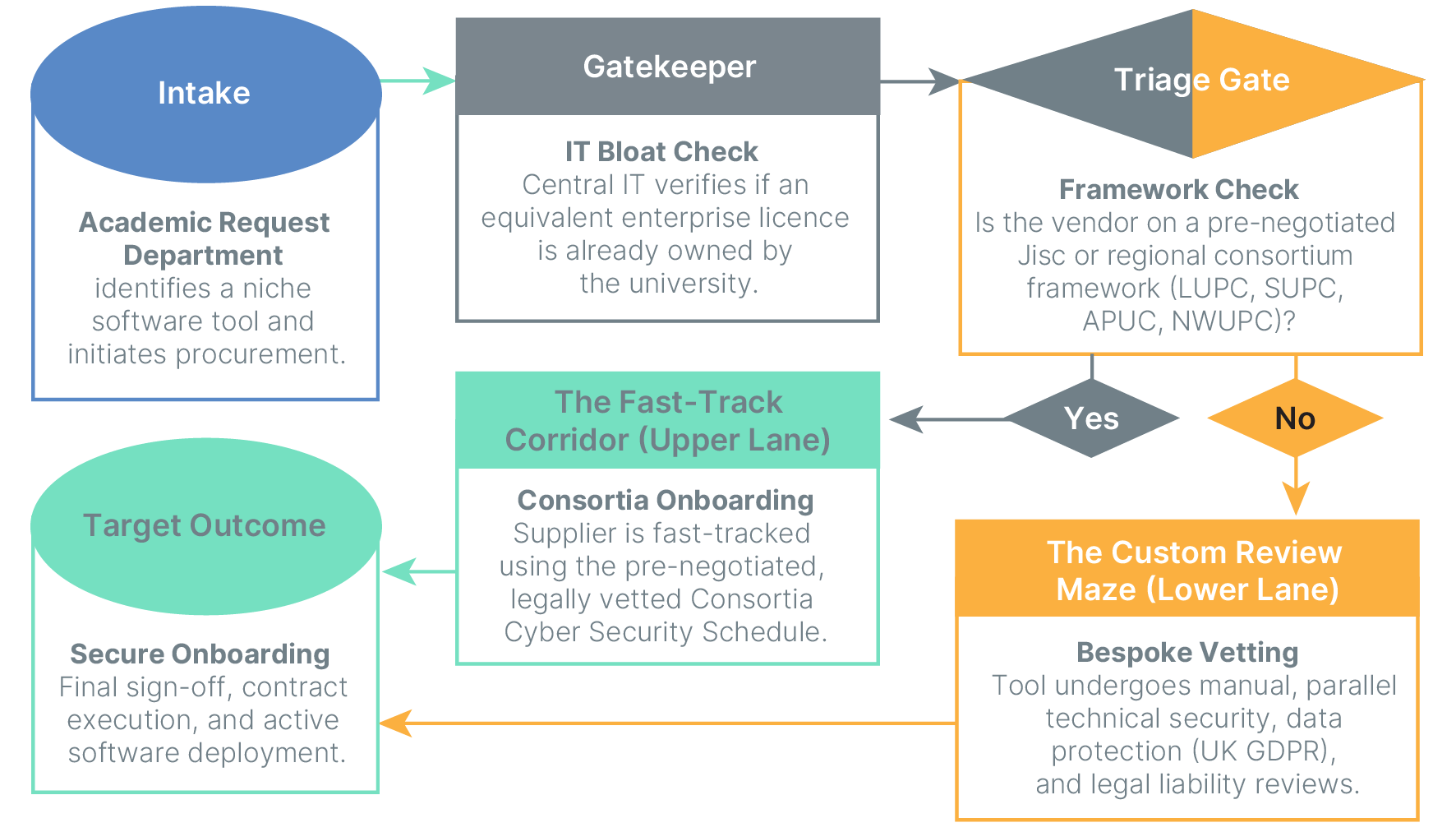
To preserve this architectural oversight and proactively try to prevent unauthorised "Shadow IT," central finance departments operate automated enforcement mechanisms. If an autonomous academic unit attempts to circumvent the central procurement process by purchasing a niche SaaS subscription via a university corporate credit card, internal financial controls immediately flag the transaction and cancel the active subscription. Technical security, data protection, and legal compliance reviews must occur systematically after a valid new tool that has passed through this process is identified, but well before contracts are executed.
To reconcile these mandatory validation processes with the departmental demand for speed, procurement teams rely heavily on pre-negotiated national and regional purchasing consortia. Overseen by Jisc (the UK’s digital agency for higher education) and regional bodies operating under the UKUPC umbrella—specifically the London Universities Purchasing Consortium (LUPC), Southern Universities Purchasing Consortium (SUPC), Advanced Procurement for Universities and Colleges (APUC) in Scotland, and the North West Universities Purchasing Consortium (NWUPC) — these frameworks provide standardised and fast tracked buying corridors.
Suppliers tendering for a place on these frameworks must agree to standardised tendering templates containing a dedicated, legally vetted "Cyber Security Schedule". If a technology provider cannot satisfy these baseline security baselines, they are locked out of the framework entirely. This fast-tracks the onboarding cycle for compliant suppliers. However, when a specialised academic tool sits outside these established consortia frameworks and breaches statutory contract value thresholds, it triggers a mandatory, highly complex competitive public tender.
This administrative friction and the extended timelines associated with bespoke public tenders pose a challenge for often lean university information security teams. These operational pressures for speed and the lack of resources dedicated to security teams have driven widespread UK reliance on the Higher Education Community Vendor Assessment Toolkit (HECVAT). Created by EDUCAUSE — a prominent US-based non-profit technology association whose empirical research and annual Horizon Reports heavily influence global university IT directorates — the HECVAT was engineered to standardise vendor risk evaluation across the academic community.
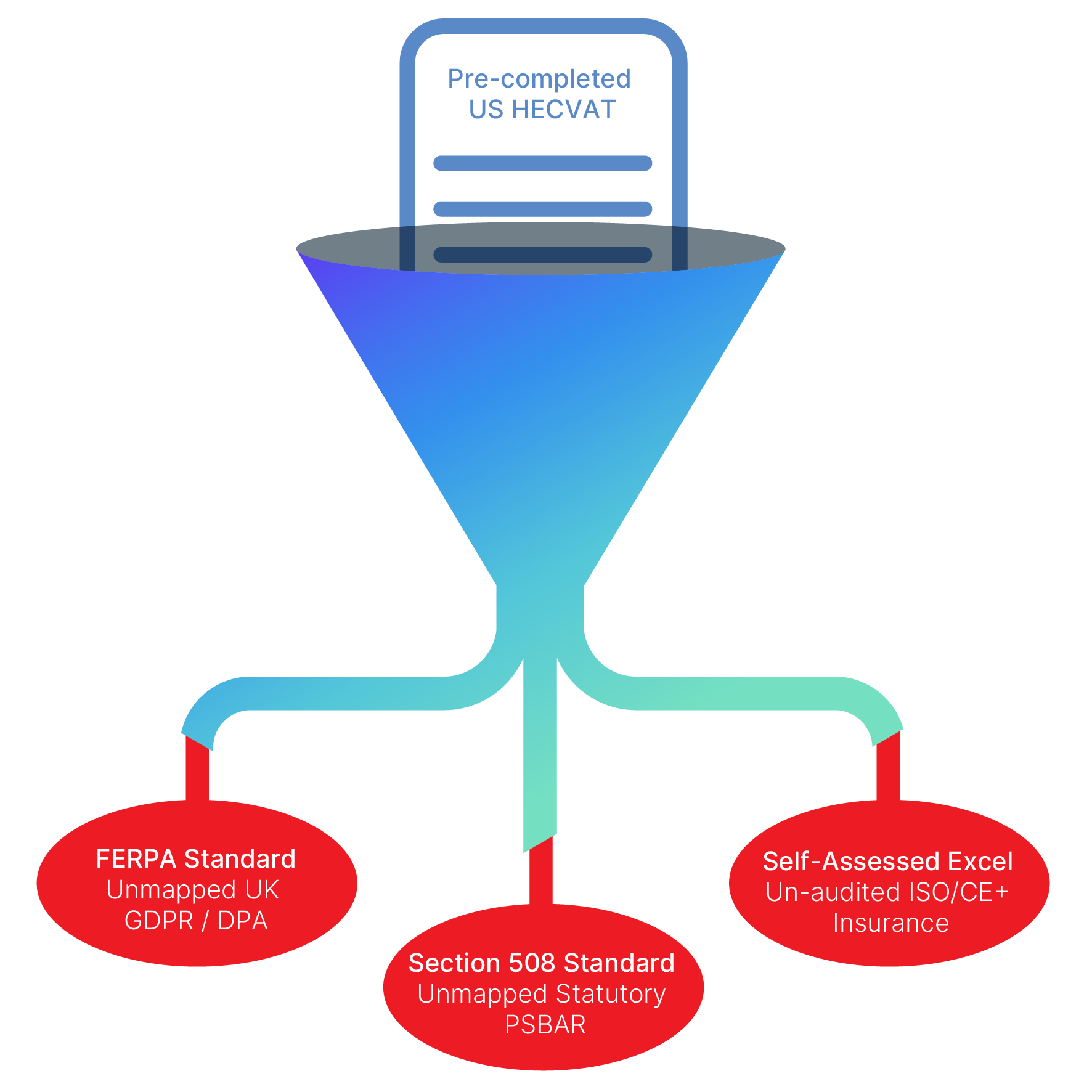
Because major global SaaS providers operating in the education sector (including Google Cloud, Salesforce, Instructure Canvas, Atlassian, and Zoom) maintain pre-completed HECVAT profiles on demand, UK institutions frequently utilise them as a convenient technical shorthand. Accepting a pre-existing HECVAT allows a lean security analyst to evaluate a vendor’s technical security maturity without forcing the supplier through a bespoke institutional assessment process.
However, operationalising the HECVAT as a standalone due diligence process within the UK ecosystem introduces several challenges in its own right. Using a US-centric toolkit like HECVAT doesn’t easily translate into other regulatory systems and requirements, including the UK:
The Privacy Blindspot: The HECVAT framework is intrinsically calibrated to assess American statutory baselines, primarily FERPA (protecting student educational records) and HIPAA (governing health data privacy). It lacks the specific mechanisms required to evaluate UK GDPR compliance. Accepting a HECVAT assessment in isolation therefore omits, for example, vital evaluations of data controller-processor relationships, cross-border data transfer impact assessments, and strict UK data residency verification. Without manually layering a deep UK GDPR assessment over the HECVAT profile, institutions risk executing legally invalid Data Processing Agreements (DPAs) and permitting unlawful international transfers of special category PII.
The Accessibility Blindspot: The HECVAT evaluates software accessibility strictly through the prism of US Section 508 standards. In the UK, higher education institutions are legally bound by the statutory requirements of the Public Sector Bodies (Websites and Mobile Applications) Accessibility Regulations 2018 (PSBAR). An application that successfully passes Section 508 due diligence still frequently fails statutory PSBAR criteria. Relying solely on HECVAT assertions therefore exposes the UK university to regulatory enforcement and reputational damage regarding digital equality and disability inclusion.
The Verification Deficit: Fundamentally, the HECVAT operates as an un-audited supplier self-assessment spreadsheet. In stark contrast, UK public sector procurement regulations, alongside the exacting underwriting standards of contemporary cyber insurance carriers, require independent, objectively audited verification. An unverified self-assessment fails to satisfy these evidentiary thresholds; a vendor’s security assertions must be corroborated by active, independently audited credentials such as Cyber Essentials Plus or ISO 27001.
The structural requirements of the three core pillars — Supplier Security, GDPR Compliance, and Academic Continuity — combined with the rigid compliance mandates of the UK public sector procurement ecosystem, impose an administrative overhead that legacy risk management frameworks are fundamentally incapable of sustaining. When under-resourced university information security teams attempt to enforce continuous compliance across an expanding, highly dynamic digital estate using static, disconnected tools, operational breakdown is the inevitable result. This chapter provides a clinical autopsy of this failure, tracing the causal chain from macroeconomic funding deficits down to total institutional blindness regarding structural zero-day exposures.
The collapse of campus third-party risk management begins at the macroeconomic level. The UK Higher Education sector is enduring acute financial pressures, compelling university boards to systematically reduce requested cyber security budgets. Security teams are financially prohibited from hiring additional staff to process complex supplier risk assessments, making manual due diligence even more economically unsustainable across an estate of thousands of vendors than in other sectors, although the challenges with scaling TPRM in general are similar.
Because lean security teams are completely overwhelmed by the sheer volume of required intake reviews, the analytical rigour applied to any given vendor assessment frequently fluctuates based on human capacity rather than objective risk thresholds. This capacity-driven triage, however, creates unacceptable institutional risks, allowing high-risk software to be waved through the procurement intake simply because an individual analyst was at capacity.
To cope with this severe mismatch between high supplier volume and insufficient headcount, institutions default to the path of least administrative resistance: either manual spreadsheets or external supplier scanning tools. The vast majority of UK universities attempt to manage third-party cyber risk by relying on basic Excel questionnaires containing 10 to 20 static security questions. Crucially, these manual assessments are executed often almost exclusively at the initial point of onboarding. Once the contract is executed and the vendor goes live within the institutional environment, there is no recurring monitoring taking place henceforth.
A point-in-time Excel questionnaire, however, is fundamentally flawed as a risk management utility. The moment an assessment spreadsheet is saved and filed, its assertions begin to decay. It cannot account for post-contract security posture changes such as unannounced data centre migrations, or internal governance changes for example. When a software vendor alters its underlying infrastructure or suffers a silent data breach mid-contract, the university remains entirely oblivious.
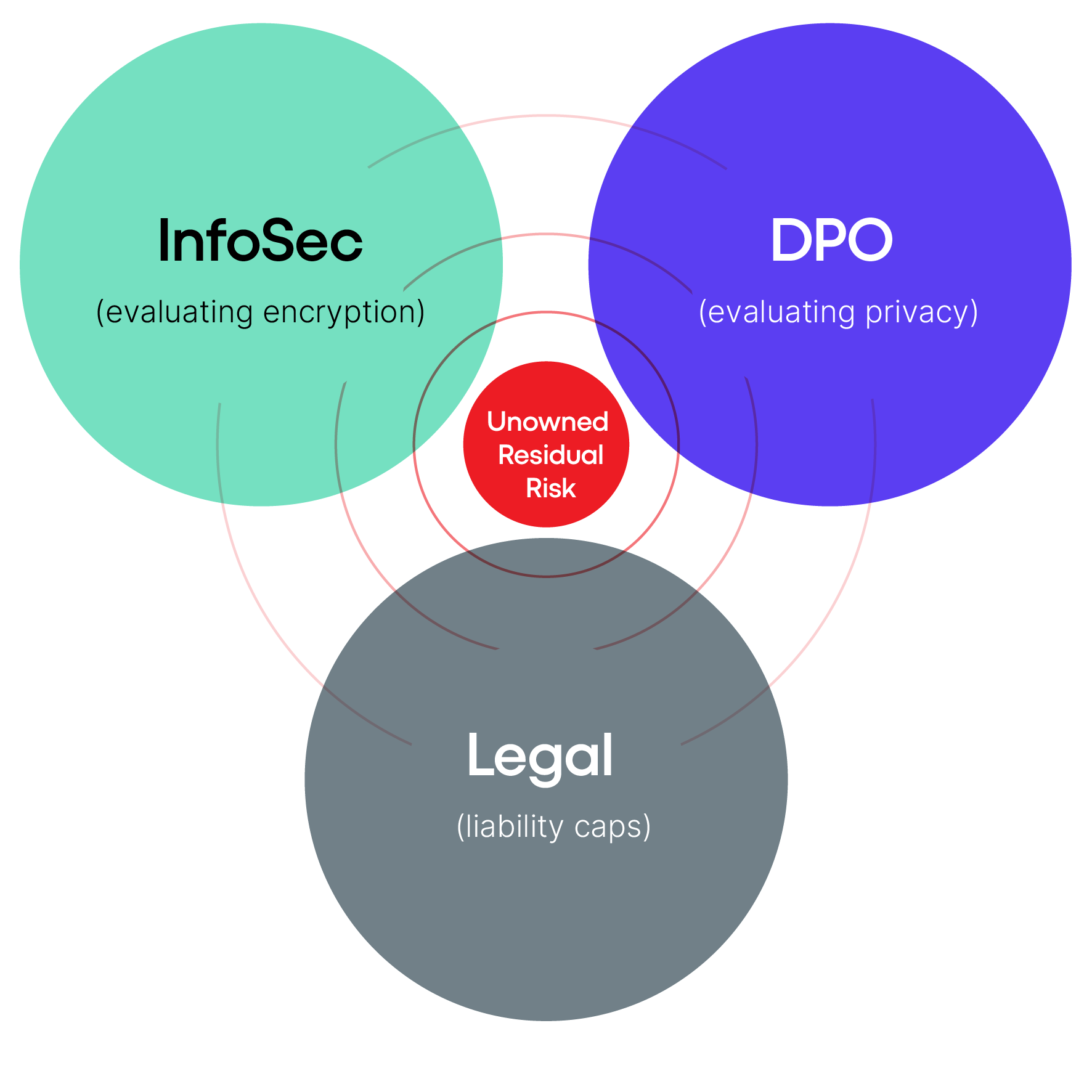
This temporal blindness is actively compounded by internal structural fragmentation. Within the university hierarchy, TPRM responsibilities are dangerously siloed across often completely disconnected teams. The IT security team evaluates technical firewalls and encryption protocols in isolation; the Data Protection Officer (DPO) covers three or four isolated data privacy questions within a regulatory vacuum; and the legal directorate independently reviews contractual liability clauses.
Because these internal directorates do not operate within a unified operational risk management structure, residual risk remains completely unowned. There is no single operational authority responsible for synthesising potential technical vulnerabilities with privacy exposure and contractual enforceability. Consequently, critical administrative oversights occur routinely: technical exceptions are granted without informing the DPO, allowing software with missing Data Processing Agreements (DPAs) or unlawful international data transfer mechanisms to slip past fragmented institutional defences. Furthermore, decentralised procurement practices compound this issue: individual academic schools frequently source cleaning services, laboratory kits, or other tools and services without informing central IT. This bypasses the intake pipeline entirely, resulting in unmonitored suppliers and wildly inconsistent due diligence standards across campus.
When this internally fragmented apparatus attempts to interface with the wider supply chain ecosystem, it can also come face to face with supplier power asymmetry. The realities of traditional TPRM generally trigger profound questionnaire fatigue among technology suppliers who routinely receive bespoke risk assessment requests from numerous of their clients at the same time. This results in severe assessment fatigue and leads to often sub-optimal responses:
The university is thus caught in an untenable operational paradox: forced to blindly accept the opaque security assertions of global tech monopolies, while simultaneously stalling the procurement of essential, innovative small suppliers and new tools due to bureaucratic gridlock.
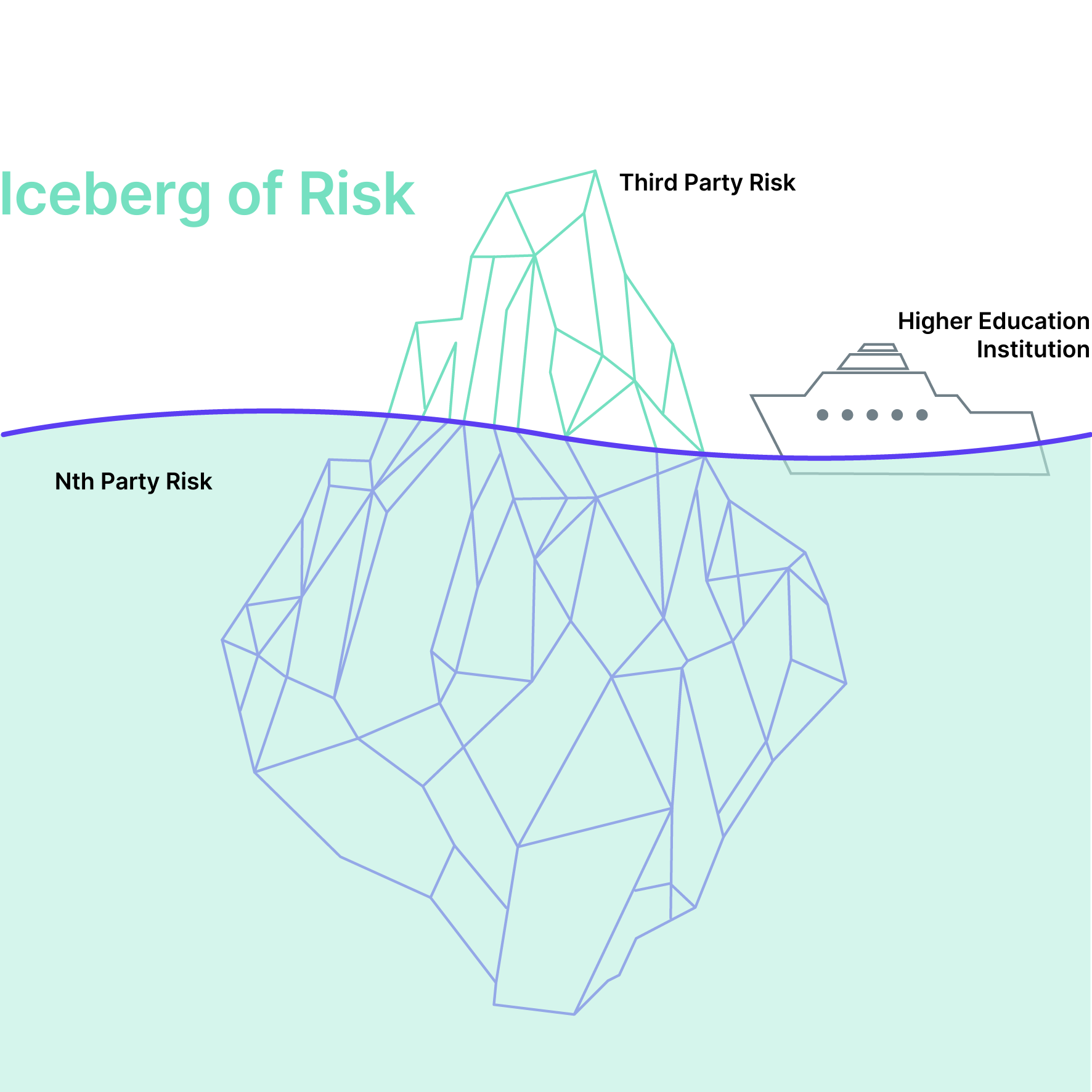
The ultimate failure with legacy TPRM, however, is the complete blindness to Nth-party concentration risk and structural exposures. Modern academic environments do not operate in self-contained silos; they are deeply embedded within highly complex, interconnected digital supply chains and shared infrastructure dependencies. UK universities face severe, unmapped supply chain concentration risk where multiple, seemingly distinct software applications or vendors are entirely dependent on the exact same underlying cloud backbone, file transfer system, legal or accounting software or cyber security tool.
When a systemic zero-day vulnerability occurs within an underlying code library (such as Log4j) or a major infrastructure provider suffers a catastrophic outage (such as CrowdStrike), lean university security teams possess no automated visibility to gauge the total "blast radius" within their extended supply chains. They cannot instantly query their static Excel spreadsheets to identify which external applications are exposed or identify the various interlinked dependencies of their critical suppliers.
This structural deficit was laid bare during the May 2026 Canvas compromise. Because university security teams could not visualise the downstream sub-processors and shared authentication microservices utilised by their primary LMS platform, incident responders were blind to their true risk exposure. They were forced to conduct highly time-consuming manual audits and having to re-authorise dozens of interconnected third-party API keys, proving definitively that static risk management collapses under the pressure of active, real-world systemic threats.
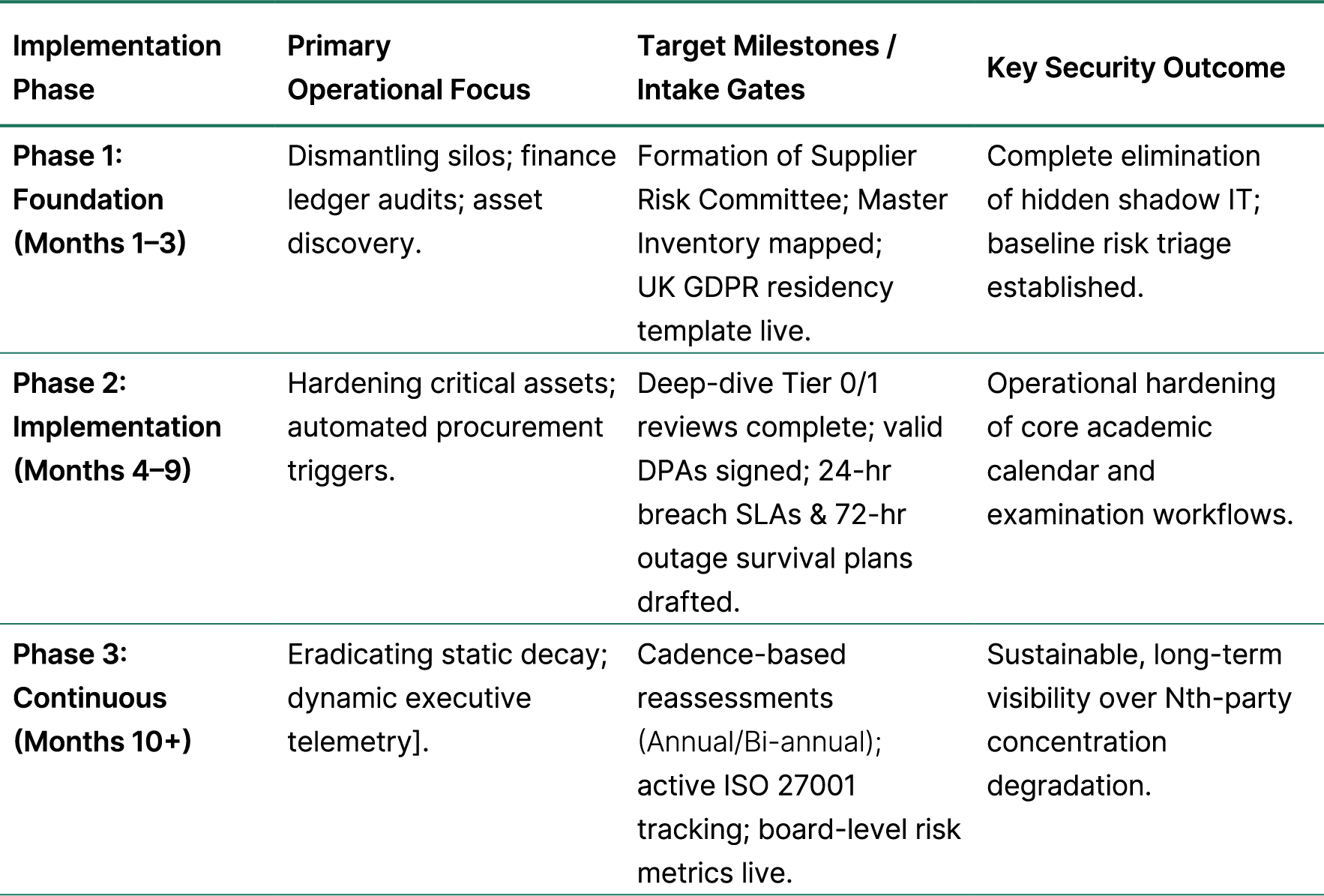
The systemic breakdown detailed in the preceding analysis proves that UK university security teams cannot cope with the demands imposed by an increasingly interconnected and complex supply chain cyber threat environment, even if they would be able to bring more headcount to bear. Attempting to process 4,000 static Excel questionnaires manually simply invites operational failure. Resolving the structural bottlenecks of siloed governance, triage, and Nth-party concentration risks requires a fundamental change in operational architecture. Security leaders must deploy a maturity blueprint designed specifically for lean headcounts. By embedding more automated third-party security workflows into pre-existing university administrative processes, institutions can systematically eliminate manual friction and establish a defensible third-party posture across three incremental phases.
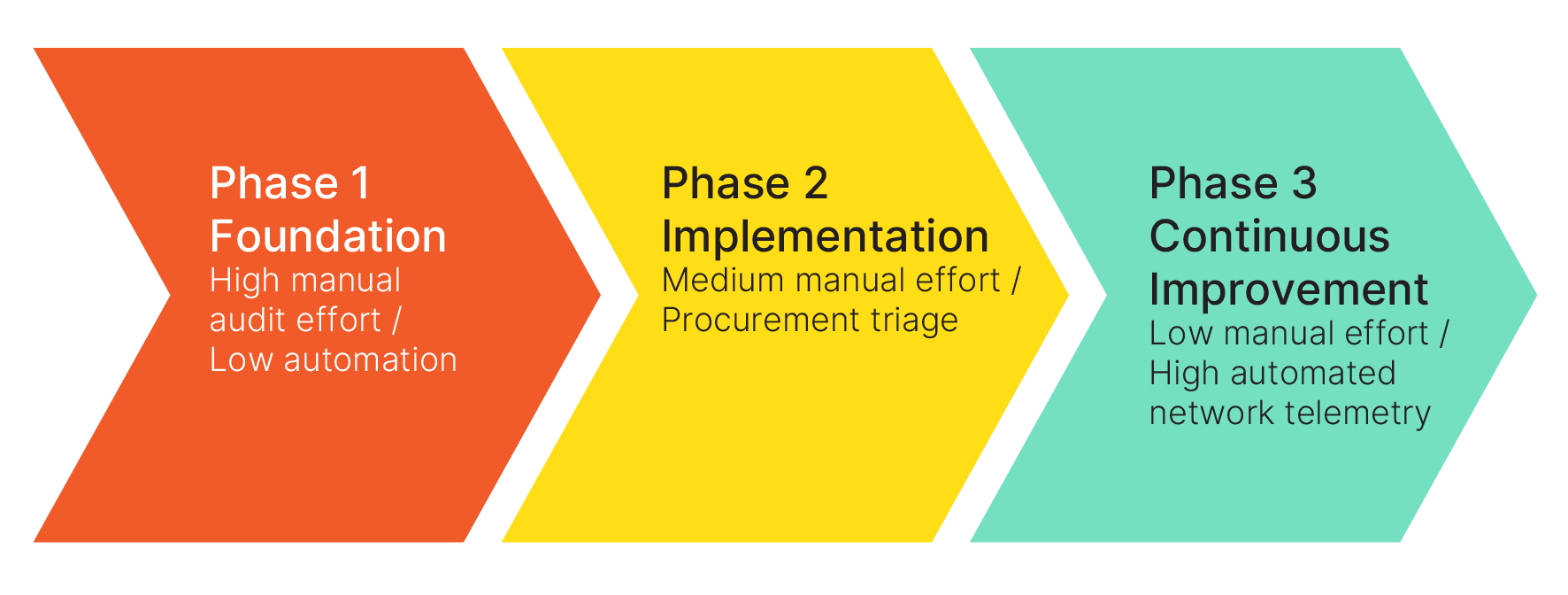
Phase 1: Foundation (Months 1–3) — Governance & Asset Triage
The immediate objective of the foundational phase is to dismantle internal administrative silos and establish absolute baseline visibility over the institutional supply chain footprint. Institutions must move away from decentralised, uncoordinated departmental software intake.
Once baseline inventory and cross-functional governance are established, the implementation phase shifts operational focus toward hardening the institution's most critical dependencies and intercepting unauthorised software before contract execution.
The final phase resolves the fundamental flaw of legacy TPRM: the decay of point-in-time risk assessments. Institutions must transition from static intake questionnaires to dynamic, ongoing ecosystem governance.
While an internally optimised, three-phase framework establishes essential administrative and governance hygiene, it remains fundamentally bounded by an inescapable TPRM ceiling: a lean institutional security team operating in isolation cannot scale its finite human capital to continuously monitor thousands of distinct software vendors or identify their critical suppliers’ own supply chain dependencies and risks. However, the UK Higher Education sector possesses a unique structural advantage that commercial enterprises often lack: an inherently non-competitive, profoundly collaborative peer culture among security professionals. Transforming campus cyber defence from an unsustainable, bureaucratic paper shield into a viable operational defence model requires the sector to operationalise and even weaponise this cultural advantage. Security teams at higher education institutions must move beyond participating in reactive threat-sharing chat rooms and pivot toward an active, cooperative, network-driven assurance model.
The foundation for collective defence already exists within the sector's operational DNA. While organisations in many sectors view their third-party risk assessments as proprietary competitive intelligence. Conversely, UK universities operate within an explicitly non-competitive security architecture. Institutional information security teams routinely utilise several highly sophisticated, established peer networks to exchange information and share operational best practices:
While these peer networks provide an exceptional defensive backstop for reactive firefighting, they are fundamentally ill-equipped to manage the proactive assurance of thousands of active software contracts. Real-time chat channels and confidential intelligence portals operate on a post-incident logic: they inform security leaders that a vendor has already been compromised. They do not provide the dynamic, pre-incident visibility required to prevent an unvetted sub-processor from ingesting special category research data or to map out the potential blast radius across the extended supply chain quickly when an incident does occur.
True operational innovation in Higher Education TPRM cannot occur within the boundaries of the current collaborative model, however, but it provides a good basis. Managing the sheer volume of institutional software intake demands abandoning static point-in-time questionnaires entirely and adopting a cooperative, network-first security architecture based on a standardised assessment framework.
By participating in a shared, live network-first security platform — such as Risk Ledger — the Higher Education ecosystem can scale its defensive capabilities exponentially, shifting from fragmented bilateral vetting to active, collective supply chain security. In a network-first model, the traditional friction of supplier onboarding is systematically dismantled across three core vectors:
Adopting a live assurance network transforms the university information security setup from an isolated administrative bottleneck into an active node within a national defensive grid. It provides a definitive solution to the Higher Education supply chain paradox, enabling resource-constrained teams to achieve enterprise-grade risk assurance at a fraction of the traditional administrative cost.
The transition from legacy, isolationist compliance practices to an active, network-driven security model results in a clear optimisation of finite institutional resources. To provide university executive boards and security leaders with an objective business case for this architectural pivot, the matrix below contrasts the operational mechanics, human capital commitments, and risk mitigation outcomes of traditional static vetting against a live, cooperative network assurance architecture.
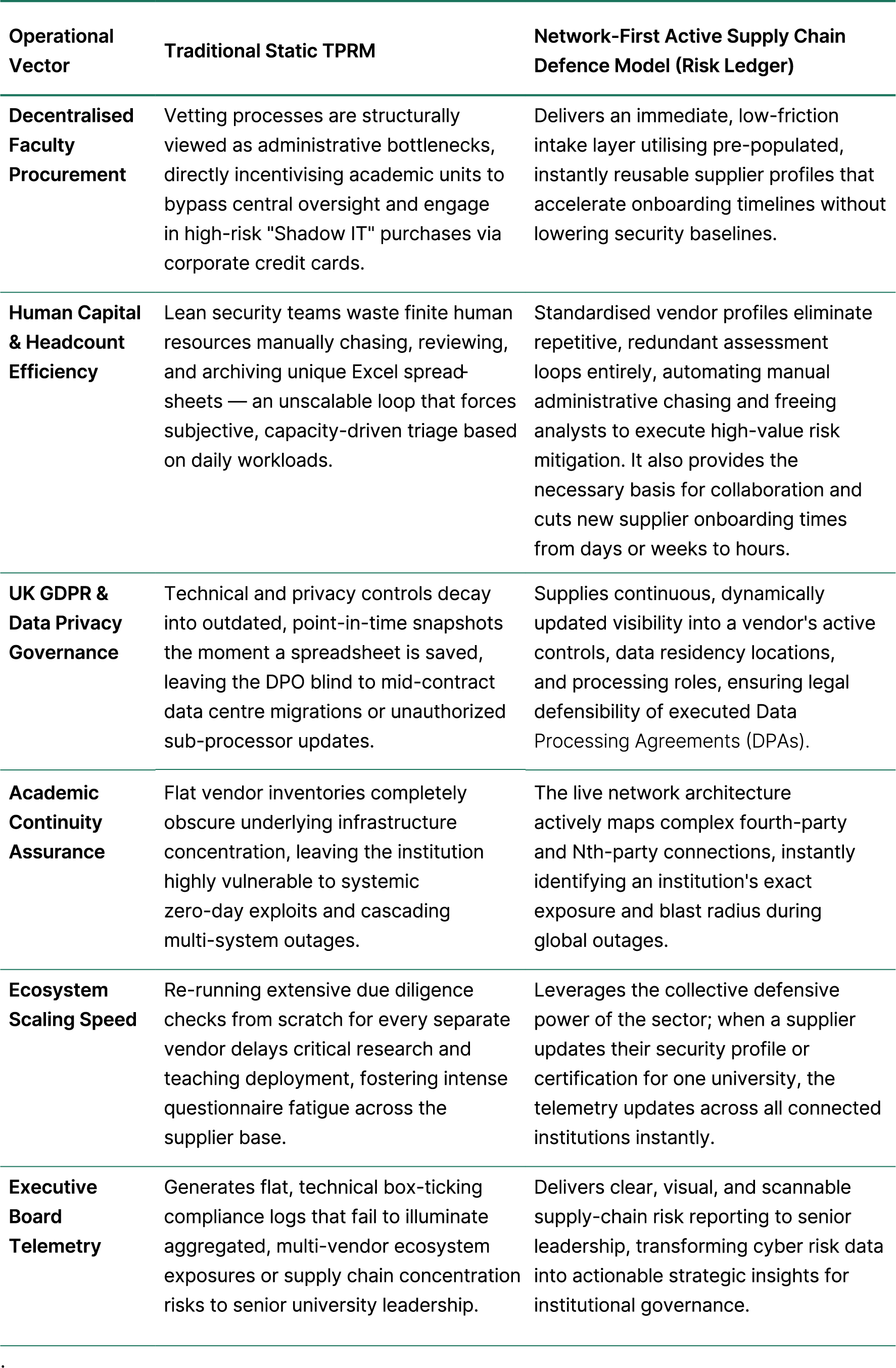
The modernisation of Higher Education Third-Party Risk Management cannot be achieved by expanding bureaucratic compliance frameworks or simply throwing additional resources at manual TPRM. Navigating the sector's distinct structural constraints requires a fundamental re-engineering of the risk management function itself. Sector resilience requires moving past isolated, point-in-time assessment models and adopting an active, collaborative network defence posture.
For a university security leader, implementing a sustainable and defensible third-party risk management capability does not mean building a more complex system or enforcing a more rigid administrative process. It requires aligning third-party risk management workflows directly with the operational priorities of the academic calendar, establishing automated procurement gates, and moving toward a continuous, network-driven assurance model.
The systemic breakdown observed across the sector — characterised by manual spreadsheets, fragmented internal governance silos, and total blindness to Nth-party concentration risks — represents a structural risk that no individual institution can resolve in isolation. When under-resourced security teams attempt to manage thousands of active software relationships using legacy tools, they expose the institution to severe operational disruptions and regulatory compliance failures.
True long-term resilience requires higher education institutions to weaponise their unique, non-competitive culture. By transitioning from traditional static vetting to a shared, live security network (such as Risk Ledger), the sector can scale its defensive capabilities exponentially. This collective model eliminates questionnaire fatigue for specialised academic providers, automates continuous posture monitoring, and unmasks hidden infrastructure concentration risks before a zero-day vulnerability cascades through the ecosystem.
To transition the institution away from legacy compliance processes and towards an active, network-driven defence model, security leaders should immediately execute the following operational steps:



Monthly research, case studies and practical guides you won't find anywhere else.
Join thousands of security managers turning their TPRM programmes into success stories.


.svg)