By clicking “Accept”, you agree to the storing of cookies on your device to enhance site navigation, analyze site usage, and assist in our marketing efforts. View our Privacy Policy for more information.
Prevalent Alternatives: 7 TPRM Platforms Compared for 2026
Compare Prevalent alternatives - Panorays, UpGuard, OneTrust, ProcessUnity, SecurityScorecard, RiskRecon and Risk Ledger - on evidence model, supplier participation, monitoring and total cost.
Risk Ledger
|
Company
September 2, 2026
|
13
mins read
Share
Prevalent alternatives worth evaluating in 2026 include Panorays, UpGuard, OneTrust, ProcessUnity, SecurityScorecard, RiskRecon and Risk Ledger, each built around a different operating model rather than a simple feature swap.
If you're reading this, you're probably not just replacing Prevalent because something's broken. You're weighing up whether a configured, questionnaire-led TPRM platform is still the right shape for your programme, or whether the underlying model needs to change.
Prevalent is a mature, full-lifecycle platform with real strengths in customisation, monitoring breadth and managed services. The question this guide answers isn't "is Prevalent bad" - it's which of these platforms actually solves the problem you have, whether that's supplier fatigue, stale evidence between assessments, weak nth-party visibility, or a managed service you no longer want to depend on.
Prevalent alternatives at a glance:
Risk Ledger: best for reusable supplier evidence and nth-party visibility across a connected network
Panorays: best for teams that want risk ratings and questionnaire automation in one platform
UpGuard: best for fast onboarding and a low learning curve
OneTrust: best for consolidating TPRM inside a broader GRC and privacy suite
ProcessUnity: best for financial services and regulated-sector vendor governance
SecurityScorecard: best for outside-in security ratings at portfolio scale
RiskRecon: best for continuous, evidence-based attack-surface scoring
Why teams look for a Prevalent alternative
This comparison draws on G2 and Gartner Peer Insights review data alongside vendor-published capability pages.
Prevalent is a credible, full-lifecycle TPRM platform, so the reasons teams go looking for alternatives aren't about missing functionality. Recurring patterns in reviewer feedback include:
Onboarding and configuration load: Reviewers describe the platform as powerful but complex to set up, with onboarding that can feel overwhelming for teams new to formal TPRM.
Reporting rigidity: A recurring complaint is limited dashboard customisation - reviewers want to see the data that matters to them on login, rather than working within a fixed report structure.
Repetitive configuration for complex assessment schedules: Teams running many assessment types report ongoing maintenance overhead rather than a one-off setup cost.
Integration gaps in some reviews: Though Prevalent's current enterprise integration story (SAP, ServiceNow) is stronger than older reviews suggest - worth checking against your own stack rather than assuming.
Comparing Prevalent alternatives
Prevalent alternatives comparison
Prevalent alternatives compared
Compare primary approach, evidence source, supplier participation
and supply chain visibility across Risk Ledger and the platforms
security teams evaluate alongside Prevalent.
How we compared:
Drawn from current G2 and Gartner Peer Insights review data for each
platform, cross-checked against vendor-published capability pages
for anything not covered in reviews.
Risk Ledger
Network-first TPRM
Risk Ledger comparison
Best for
Security-led supplier assurance and supply chain visibility
Primary approach
A connected network where suppliers maintain one reusable security profile and each customer applies its own policies, criticality and risk context.
Supplier evidence
Suppliers share security information once, and that evidence is reused across every connected customer relationship.
Monitoring
Tracks changes to supplier controls and evidence directly, with suppliers verifying and updating their own profile.
Supply chain visibility
Nth-party visibility comes from suppliers declaring their own critical dependencies, feeding concentration-risk mapping across the network.
Supplier participation
Suppliers maintain profiles free of charge and share evidence directly with customers, reducing repeated one-off requests.
Operating effort
Reviewers note initial setup can be time-consuming and the interface isn't always intuitive for new users; ongoing collection effort drops once suppliers are onboarded.
Key consideration
Not a broad enterprise GRC suite and not a standalone ratings product. Strongest where the priority is reusable evidence, supplier participation and dependency visibility beyond direct suppliers.
Panorays
Assessments + monitoring
Panorays comparison
Best for
Combining assessments with attack-surface monitoring
Primary approach
Automated questionnaires combined with scheduled external scanning in one dashboard.
Supplier evidence
Automated, dynamic questionnaires plus AI-assisted document review; reviewers consistently praise ease of use.
Monitoring
Scheduled scanning combined with questionnaire data rather than fully continuous, real-time monitoring.
Supply chain visibility
Fourth-party discovery is included. Test how technical connections map to business-critical dependencies.
Supplier participation
Vendors respond through structured workflows; role granularity for larger teams is a noted limitation.
Operating effort
Reviewers flag onboarding effort, per-API-call cost, and an API that requires updating whole supplier records rather than partial fields.
Key consideration
Strong combined workflow for teams wanting assessments and scanning together; cost scaling and role granularity are worth testing at enterprise scale.
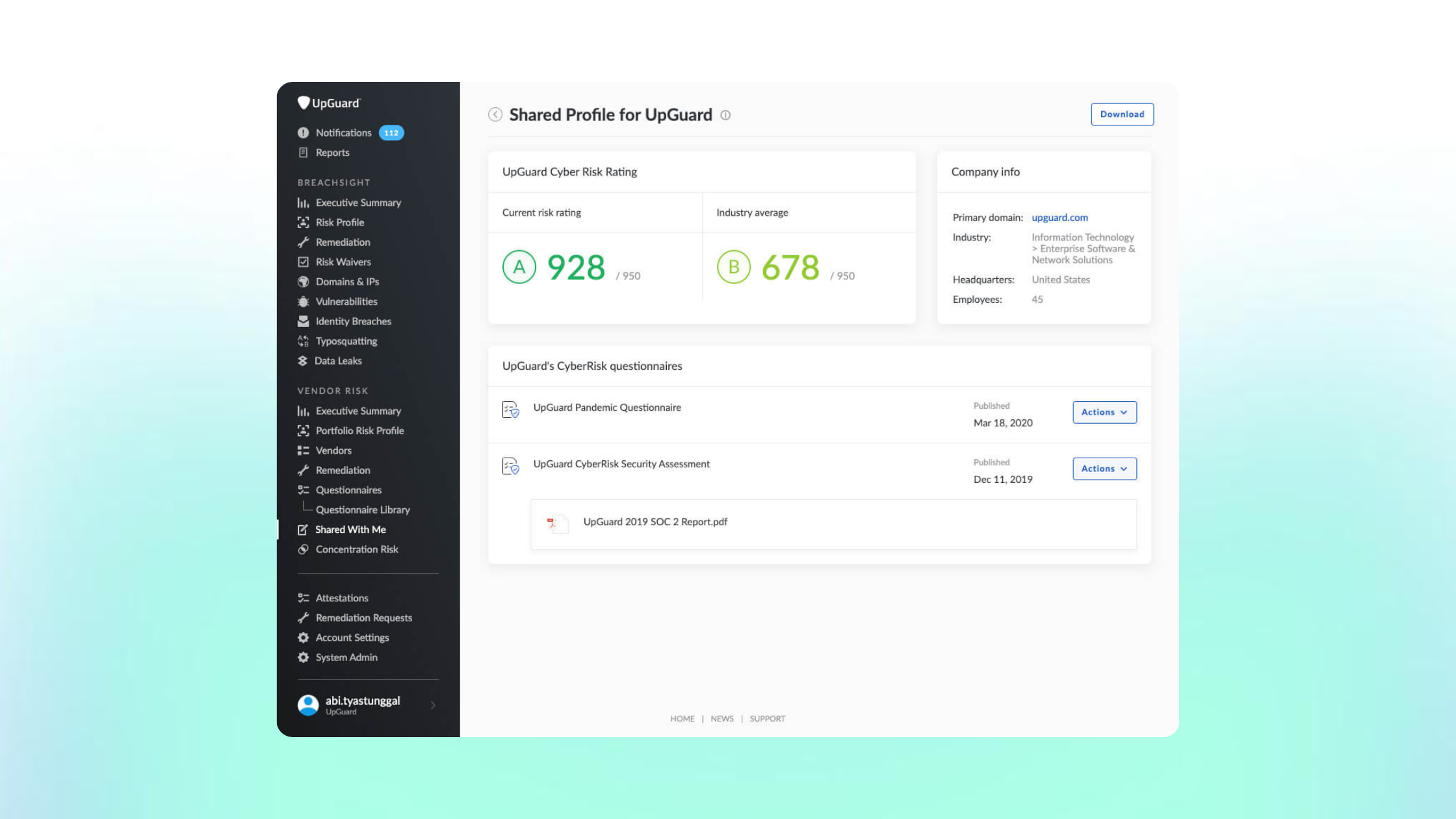
UpGuard
Ratings + questionnaires
UpGuard comparison
Best for
Fast onboarding and a low learning curve
Primary approach
Outside-in security ratings combined with a questionnaire library, AI-assisted document review and remediation workflows.
Supplier evidence
Pre-built questionnaires covering NIST, ISO, SIG and regional regulations supplement externally observed findings.
Monitoring
Ratings update multiple times a day across attack surface, breach vectors and data leak signals.
Supply chain visibility
Includes automatic fourth-party detection. Test how deep the mapping goes for concentration risk specifically.
Supplier participation
Suppliers respond to questionnaires and remediation requests rather than maintaining a portable profile.
Operating effort
Reviewers consistently cite limited reporting customisation as the main ongoing friction; onboarding itself is repeatedly praised as fast.
Key consideration
Strong day-to-day usability and a genuine combined ratings-plus-questionnaire proposition; reporting depth is the recurring gap.
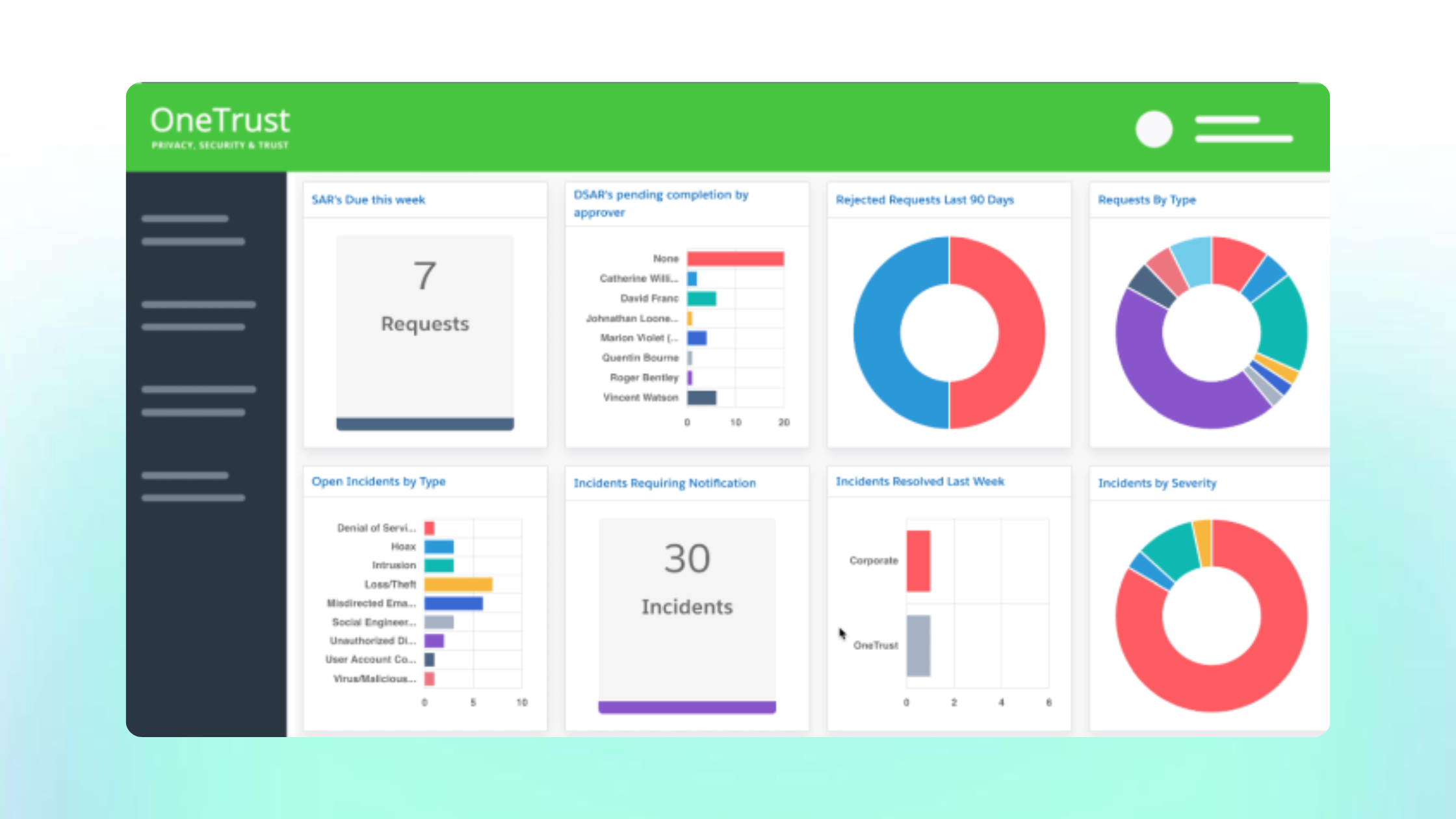
OneTrust
Broad GRC suite
OneTrust comparison
Best for
Consolidating TPRM inside a broader GRC and privacy suite
Primary approach
Third-party risk sits inside a much wider privacy, compliance and enterprise risk platform, with a Third-Party Risk Exchange that pulls in monitoring feeds from other providers.
Supplier evidence
Configurable assessments span security, privacy, ethics and compliance domains, not just cyber risk.
Monitoring
Monitoring is largely delivered through integrated third-party feeds rather than a native scanning engine.
Supply chain visibility
The platform's strength is governance breadth rather than network visibility. Test relationship-mapping depth directly.
Supplier participation
Vendors respond through structured, configurable assessment workflows, customer by customer.
Operating effort
Reviewers consistently cite a steep learning curve, a dashboard needing a refresh, and pricing that is opaque and can escalate at renewal.
Key consideration
Unmatched breadth for consolidating governance functions in one platform; that breadth is also the operating cost, per reviewers.
ProcessUnity
Configurable enterprise TPRM
ProcessUnity comparison
Best for
Financial services and regulated-sector vendor governance
Primary approach
Highly configurable lifecycle workflows built for savvy business users to administer without heavy IT involvement.
Supplier evidence
Native import/export and an open API support integration with existing systems; recently added AI functionality aims to speed review time.
Monitoring
Monitoring integrations tie external intelligence into the configured workflow rather than a built-in scanning engine.
Supply chain visibility
Primarily direct-vendor focused; nth-party visibility is not the platform's core strength.
Supplier participation
A vendor portal supports evidence submission and profile updates.
Operating effort
Reviewers praise support quality but note performance issues including slow loading and timeouts, and a steep learning curve for full configuration.
Key consideration
Strong fit for mature, regulated programmes with dedicated resource; configurability is a genuine strength that comes with real administrative overhead.
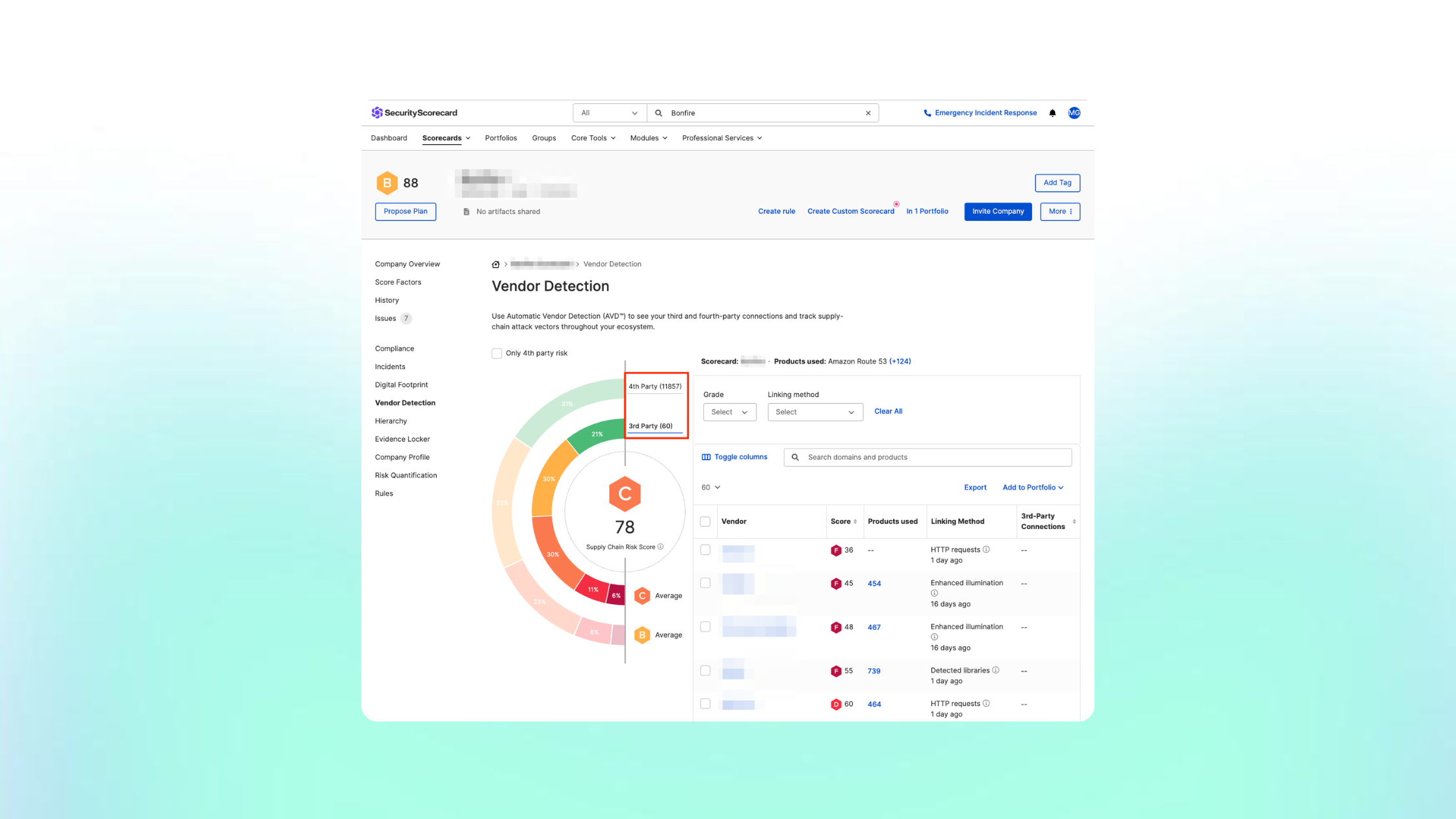
SecurityScorecard
Security ratings
SecurityScorecard comparison
Best for
Outside-in security ratings at portfolio scale
Primary approach
Outside-in ratings plus peer benchmarking and threat-informed risk quantification.
Supplier evidence
External findings can be supplemented through assessments and supplier-response workflows.
Monitoring
Continuous monitoring of network security, patching cadence, DNS health and leaked credentials.
Supply chain visibility
Indirect relationship discovery is included. Reviewers note accuracy issues worth testing on your own domains.
Supplier participation
Suppliers can respond to findings and add context rather than maintaining a portable profile.
Operating effort
Reviewers praise ease of use and setup, but describe the interface as data-rich and occasionally overwhelming without a cybersecurity background; asset misattribution recurs.
Key consideration
Strong for peer benchmarking and board-level conversations; validate attribution accuracy directly before relying on it.
RiskRecon
Evidence-based ratings
RiskRecon comparison
Best for
Continuous, evidence-based attack-surface scoring
Primary approach
Direct monitoring of a company's internet-facing presence, using a customisable asset-valuation model and risk policies, now part of Mastercard.
Supplier evidence
Ratings are the core evidence source, with AI-assisted questionnaire capability layered on for a fuller assessment.
Monitoring
Continuous scanning; reviewers cite reliable ratings and a low false-positive rate.
Supply chain visibility
Scanner-inferred rather than supplier-confirmed; not the platform's primary focus.
Supplier participation
No direct supplier action required for base ratings.
Operating effort
Reviewers describe implementation and customer success support positively; independent review volume is thinner than the larger ratings platforms, so weight this against Gartner Peer Insights directly.
Key consideration
Backed by Mastercard's scale; strongest as a ratings layer rather than a full TPRM workflow replacement.
Risk Ledger
Risk Ledger is a network-first TPRM platform where suppliers maintain one reusable security profile shared across every connected customer relationship.
Strengths
Suppliers submit evidence once and it's reused across every connected customer, rather than resubmitted per relationship
Nth-party visibility comes from suppliers declaring their own dependencies, not inference from scanning
Free for suppliers to join and maintain, which removes the usual incentive problem behind supplier fatigue
Framework-mapped standardised assessment reduces per-question maintenance versus fully bespoke questionnaires
Drawbacks
Initial setup takes real time before the network effect (overlapping suppliers already on the platform) delivers its full value
Not built as a broad enterprise GRC suite, so teams needing privacy, ethics or contract-lifecycle modules in the same platform should look elsewhere
Best use case: teams whose core pain is supplier fatigue, stale evidence between assessments, or the need to see risk beyond direct suppliers.
Panorays
Panorays combines automated questionnaires with scheduled external scanning in a single dashboard.
Strengths
Automated, dynamic questionnaires with AI-assisted document review
Strong fit where privacy, DSAR and third-party workflows need to sit under one governance umbrella
Drawbacks
Steep learning curve, repeatedly cited across reviews
Dashboard described as needing a refresh
Pricing is opaque and renewal increases are a recurring complaint
Nth-party visibility is thinner than dedicated network or scanning tools - governance breadth is the strength, not supply chain mapping
Best use case: teams consolidating third-party risk inside a wider GRC and privacy programme, where breadth matters more than specialist TPRM depth.
SecurityScorecard
SecurityScorecard delivers outside-in security ratings combined with peer benchmarking and threat-informed risk quantification.
Strengths
Continuous monitoring across network security, patching cadence, DNS health and leaked credentials
Reviewers consistently praise ease of use and ease of setup
Strong for peer benchmarking and board-level reporting
Suppliers can respond to findings and add context rather than the score being purely one-directional
Drawbacks
Interface can feel data-heavy and occasionally overwhelming without a cybersecurity background
Asset misattribution is a recurring reviewer complaint, worth testing on your own domains before relying on it
Indirect relationship discovery exists but accuracy needs validating for your own supplier set
No native reusable supplier-profile model - evidence is largely inferred, not supplier-declared
Best use case: teams that need portfolio-scale ratings for benchmarking and board conversations, rather than a full assessment workflow.
RiskRecon
RiskRecon, part of Mastercard, monitors a company's internet-facing presence directly and scores it against a customisable asset-valuation model.
Strengths
Evidence-based scoring - findings come with documented evidence, not just a number
Reviewers consistently cite a low false-positive rate
Backed by Mastercard's scale and financial stability
AI-assisted questionnaire capability now layered on top of the ratings core
Drawbacks
Independent review volume on mainstream platforms (G2 in particular) is thin; most available sentiment sits on Gartner Peer Insights
Nth-party visibility is scanner-inferred, not the platform's primary focus
No native supplier participation model - suppliers don't maintain or dispute a profile the way they would in a network or questionnaire-led platform
Positioned as a ratings layer rather than a full TPRM workflow replacement, so most buyers pair it with something else
Best use case: teams that want a dedicated, evidence-backed ratings layer to sit alongside an existing assessment workflow, rather than replace it.
Which Prevalent alternative fits which team
The honest answer depends on which problem is actually driving the search, not on a generic ranking. These are the patterns that come up most often.
"Our suppliers keep telling us they've already answered this exact set of questions for another customer."
This is Risk Ledger's core case. Reusable, supplier-maintained evidence solves duplicate work directly rather than automating the sending of duplicate requests faster.
"We need to see risk beyond our direct suppliers, not just the vendors we've onboarded."
Risk Ledger's nth-party visibility comes from suppliers declaring their own dependencies, which is a different (and more verifiable) source than the scanner-inferred fourth-party detection UpGuard and Panorays offer. If supplier-confirmed relationships matter more than broad inferred coverage, Risk Ledger fits. If broad external inference is enough, UpGuard or Panorays cover it at lower setup cost.
"We want assessments and continuous monitoring together, without stitching two separate tools together."
Panorays and UpGuard both genuinely combine the two. Panorays edges ahead on assessment depth; UpGuard edges ahead on ease of onboarding and ratings freshness.
"Third-party risk needs to live inside our existing privacy and compliance programme, not as a separate system."
OneTrust is the strongest fit here - the breadth across 50-plus frameworks is real, and the trade-off (steep learning curve, opaque renewal pricing) is one many regulated enterprises accept for that consolidation.
"We're in financial services and need deep, bespoke configurability our internal team controls."
ProcessUnity's configurability and support quality are consistently the strongest reviewed traits for this specific need, provided you have the internal resource to configure and maintain it.
"We need portfolio-level ratings for board or insurance conversations, not a full assessment workflow."
SecurityScorecard and RiskRecon both fit here. SecurityScorecard has stronger peer-benchmarking framing; RiskRecon's evidence-per-finding model suits teams who want to interrogate a score rather than just report it.
"We want the assessment work done for us, not another platform to run."
None of this shortlist is built primarily as a managed service. This is genuinely where Prevalent's managed-service option is a real advantage over every platform here, including Risk Ledger - worth naming plainly rather than working around it.
"We need something running fast, with minimal setup."
UpGuard is the clearest fit on onboarding speed alone.
Why organisations choose Risk Ledger
The mechanic is simple: suppliers maintain one security profile, and every connected customer applies its own policy and risk appetite against that same profile. We built it this way because the real cost of TPRM isn't only the buyer's workflow - it's the duplicated work every supplier does for every customer that asks the same questions in a different format.
We've seen this pattern directly:
One financial services firm running Prevalent as its incumbent evaluated us to reduce manual assessment overhead ahead of a renewal deadline.
Another, in insurance, was running Prevalent alongside a separate procurement suite and needed a clearer way to show concentration-risk exposure to its board - something neither tool alone was built to surface.
A third had previously used a managed monthly-reporting service and wanted to see supplier information change between reporting cycles rather than wait for the next report.
If information only arrives on a schedule, the question worth asking any vendor is what can change between reports, and whether your own team can investigate it directly rather than waiting.
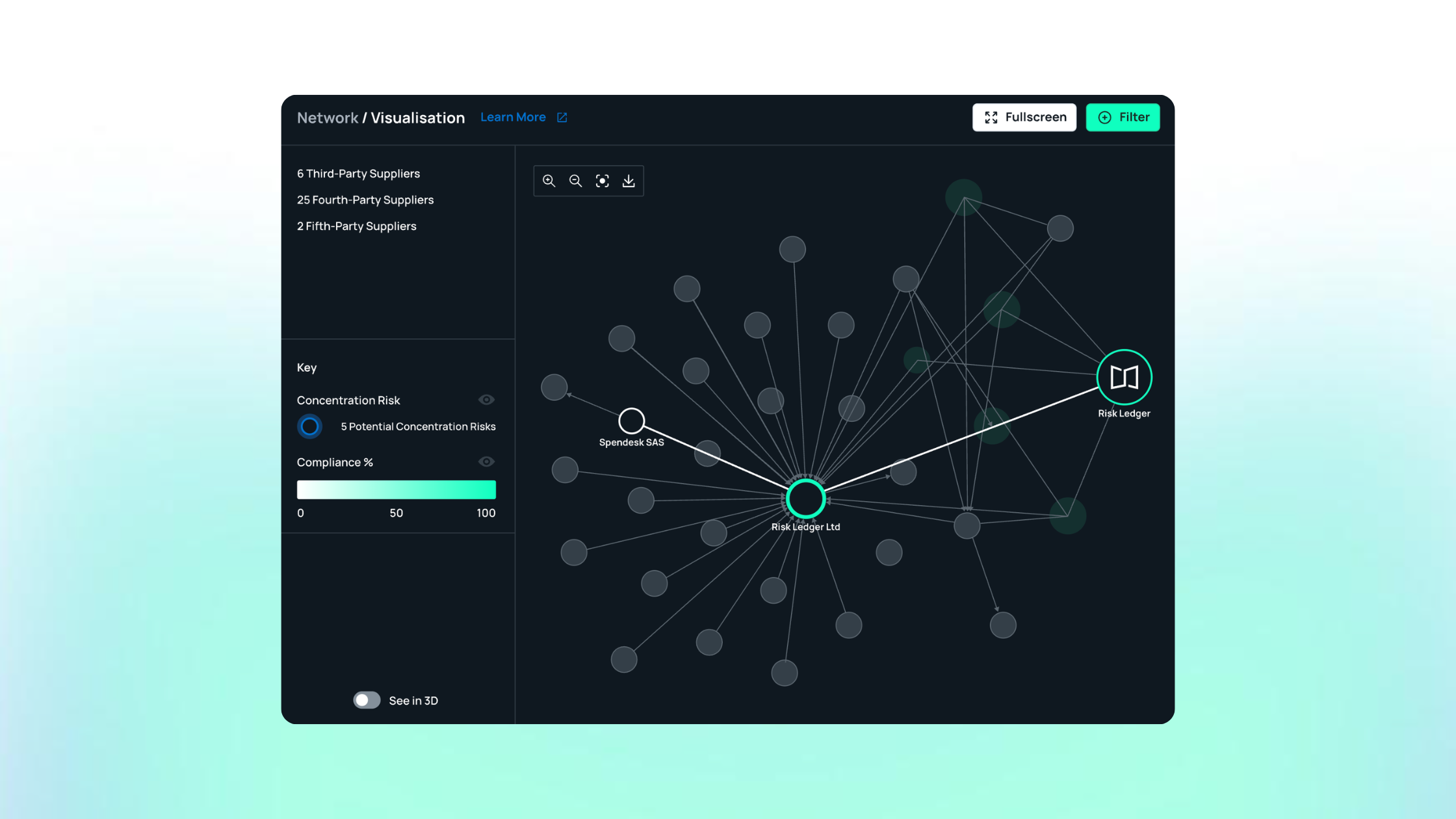
That reusable-evidence model also changes what supply chain visibility looks like in practice. Because suppliers declare their own relationships rather than having them inferred from scanning, customers get a verified map rather than a guess.
Schroders Personal Wealth has visibility across 95% of its suppliers, including changing nth-party connections. United Utilities has 80% of the UK water network already represented on the network. ScotRail uses it to visualise incidents and coordinate directly with suppliers when something goes wrong.
When a widely-used piece of software is compromised, we can issue a standard question once across the network rather than each customer chasing the same supplier separately - a supplier answers once, and every connected customer sees the response. That collapses a normally slow, one-to-one alerting process into something closer to real time.
Prevalent alternatives: a practical shortlisting checklist
Whichever platform you're evaluating, these questions cut through vendor positioning faster than a feature list.
On evidence and freshness
Where does each risk finding actually come from: supplier evidence, external scanning, purchased intelligence, or inference?
Can a supplier verify, dispute or add context to a finding inside the platform itself?
What changes automatically between assessments, and what only updates when someone manually reassesses?
On supplier participation
What does a new supplier actually have to do, and what's the incentive for them to do it?
Do suppliers pay to use the platform, and are there limits on who can see or reuse their profile?
Ask to see four real cases: a supplier already represented on the platform, a new enterprise supplier being onboarded, a small supplier with limited resource, and a supplier that refuses to participate.
On exposure and incident response
How are fourth- and nth-party relationships actually discovered - supplier-confirmed, externally inferred, or bought in as a database?
During a live incident, how do you move from an alert to a confirmed list of affected suppliers?
Can one supplier's response be reused across every customer relationship that needs it, or does each customer chase separately?
On operating effort and total cost
Who maintains questionnaires, mappings and regulatory updates on an ongoing basis - your team, or the vendor?
What's separate from the licence cost: implementation, integrations, monitoring feeds, managed assessments, training, renewal uplifts?
If you switch away later, what evidence and workflow history can you actually export?
On proof
Ask for a demo using a real, messy supplier scenario - not a preselected happy path.
Request a reference customer with a similar team size, sector, and supplier count to your own.
Ask what percentage of alerts or findings actually result in an owner, a decision or remediation, rather than being logged and ignored.
A lower headline price doesn't automatically mean lower total cost. If a platform is cheaper but the programme still needs more supplier chasing, more analyst time or a heavier internal maintenance load, that cost shows up somewhere else. Run the same set of questions against every vendor on your shortlist, including us.
Risk Ledger
Best for: reusable supplier evidence
Evidence model: supplier-declared
Watch for: setup time before network value kicks in
Is it still called Prevalent, or "Mitratech Prevalent"?
Mitratech acquired Prevalent in October 2024, and the platform is now marketed as Mitratech Prevalent, though "Prevalent" remains the common shorthand.
What's the difference between a TPRM platform and a security ratings platform?
A TPRM platform manages the full assessment and workflow lifecycle - questionnaires, remediation, contracts, reassessment. A ratings platform (SecurityScorecard, RiskRecon) scores external attack surface continuously but doesn't typically run the assessment workflow itself. Several vendors on this list, including Prevalent, Panorays and UpGuard, combine both.
Do any of these Prevalent alternatives offer a managed service?
Prevalent's managed service is a genuine differentiator among this shortlist - none of the seven alternatives compared here lead with a managed-service model in the same way. If you want the assessment work executed for you rather than a platform to run internally, that's worth weighing against the switching case.
How long does switching TPRM platforms usually take?
It depends more on supplier participation than on the software itself. Ask any vendor for median invitation-acceptance, completion and reassessment times for customers similar to you before assuming your own timeline.
Is Risk Ledger free for suppliers to join?
Yes. Suppliers create and maintain a profile at no cost, which is part of why evidence stays current - there's a reason to keep it updated beyond a single customer's request.
.png)






.svg)