October 27, 2026
・
12
mins read

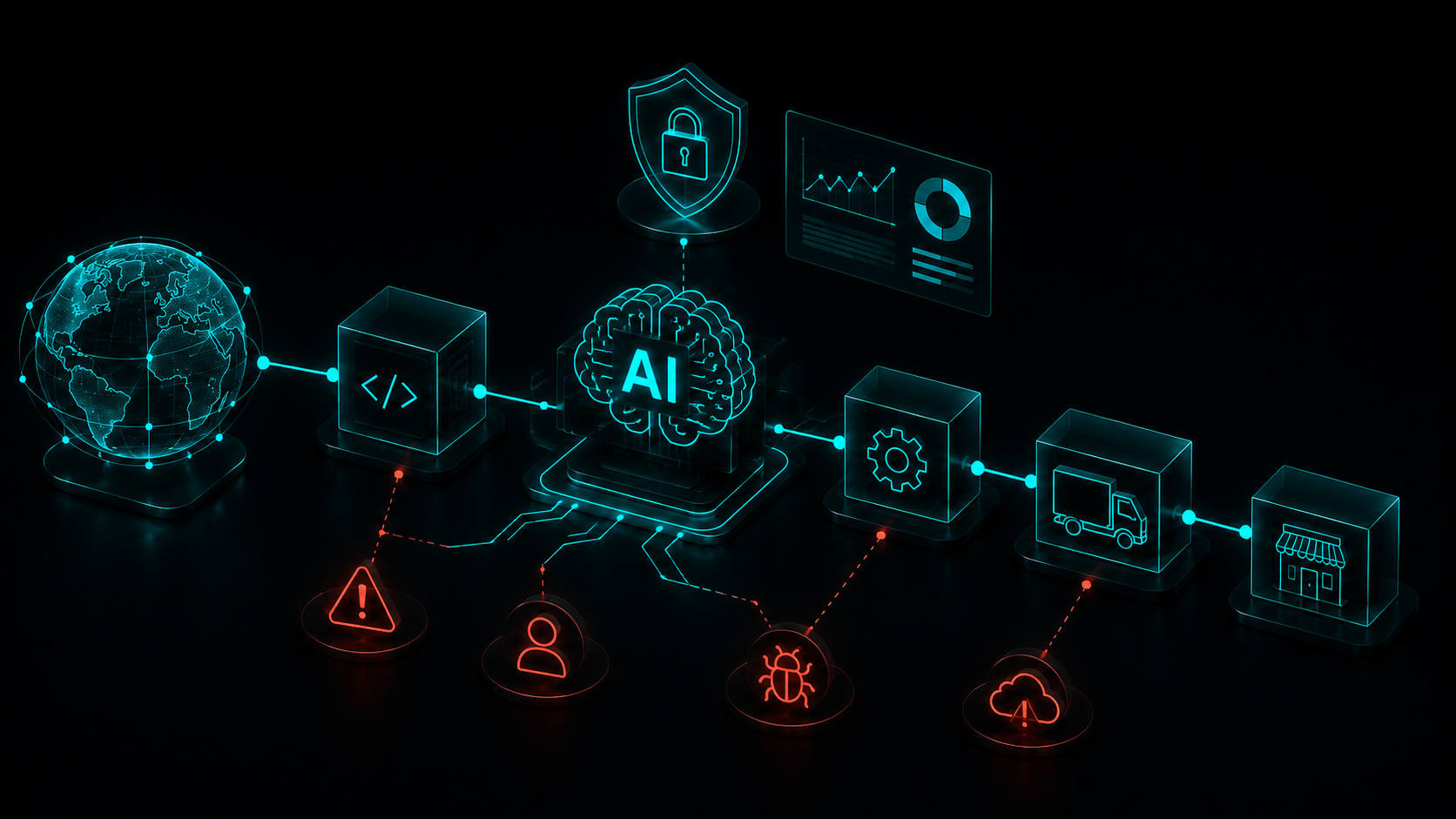
It now feels like a lifetime ago that ChatGPT burst onto the stage. Suddenly, we had technology we could interact with using plain language that could challenge our thinking, offer alternative perspectives, adopt a particular role or context, and turn complex information into accessible summaries. Inevitably, the Skynet jokes followed.
In the last few years, general-purpose AI models have advanced considerably. The most capable are often described as “frontier AI”: advanced models that can perform an increasingly broad range of tasks rather than being designed for one narrow use case.
Skynet isn’t online yet; however, the cyber security implications have moved well beyond the theoretical. There is now widespread recognition of the role AI can play in cyber operations, both for malicious actors and defenders. In July 2026, OpenAI and Anthropic both disclosed that their AI models had autonomously broken out of isolated test environments and compromised the real systems of other organisations. Separately, Anthropic disclosed that a state-sponsored group used Claude Code to have AI agents conduct an espionage campaign against around 30 organisations.
It is therefore natural to ask, both internally and of the suppliers across your supply chain: What are you doing about the risks presented by frontier AI?
For as long as I can remember, there has consistently been more data to analyse than people available to analyse it. A longstanding goal in cyber security has been to develop tools that act as force multipliers for cyber analysts. Whether scripts providing basic automation or cloud-scale analytics, today’s frontier AI models represent a natural progression in how we have tried to address that challenge.
The volume of telemetry and other data available to identify risks and detect and respond to malicious activity continues to grow. The same is true of the information an attacker might collect and process when conducting cyber operations against a target. Frontier AI models have demonstrated a considerable ability to process this data quickly and surface findings for analysts to investigate or act upon.
AI agents take this a step further. Rather than simply analysing information or recommending an action, they can perform sequences of tasks with limited human involvement. In a cyber context, that might include enumerating targets, searching for vulnerabilities, attempting exploitation and undertaking other activities traditionally performed by human operators.
Frontier AI is therefore better understood not as a new category of cyber threat, but as an accelerant of activities that already underpin effective cyber operations. Vulnerabilities can be identified and exploited more quickly, and attacks can be conducted at greater scale, leaving defenders less time to detect and respond. Security has already shifted towards continuous monitoring in many areas. However, assurance activities such as penetration testing remain periodic, and the frequency and coverage of vulnerability scanning can vary considerably. As AI reduces the time between vulnerability discovery and exploitation, organisations will need to move towards continuous, always-on testing to find and address vulnerabilities before attackers do.
In my experience, sophisticated malicious actors already invest considerable effort in understanding their targets’ supply chains. They draw not only on open-source information, but also on intelligence gathered through previous operations, current access to targets’ networks, and other actor-controlled infrastructure.
As supply chains become more complex and interconnected, they are also becoming increasingly dynamic. Suppliers are continually added, replaced or removed as business needs change. The same is true across those suppliers’ own supply chains.
The result is a constantly evolving ecosystem that is difficult to map and even harder to monitor. AI-enabled tools are particularly well suited to helping malicious actors process disparate sources of intelligence, maintain a more current picture of these relationships and identify the suppliers or dependencies that offer the most promising routes to their ultimate targets.
At the same time, organisations are trying to understand how their suppliers are using AI, whether within customer-facing services or internally for activities such as software development, customer support and data analysis. This can change how customer data is accessed and processed, and therefore it may be exposed to unauthorised employees, retained or used to train models unexpectedly, transferred to another jurisdiction, or disclosed to an external AI provider or another customer. Unapproved employee use of AI tools can create similar risks outside established controls.
The risks extend beyond confidentiality. AI-generated outputs or code may be inaccurate, biased or insecure. Systems connected to sensitive data and operational tools could also be manipulated into disclosing information or taking unintended actions. Organisations therefore need to understand where their suppliers use AI, what data and systems it can access, which underlying providers are involved, and whether appropriate security controls, human oversight and monitoring remain in place.
Fundamentally, frontier AI raises the same strategic issues that organisations expect their suppliers to address whenever they encounter a new or disruptive technology. Ultimately, these are questions of governance. Does a supplier’s cyber security strategy evolve as the threat landscape changes, including in response to the cyber risks posed by frontier AI? Does the organisation have a clear strategy for assessing and managing the risks introduced by the adoption of frontier AI or any other new technology?
Before asking every supplier detailed questions about frontier AI, organisations should identify their essential business functions and the suppliers that underpin them. If a supplier suffered a disruption tomorrow, would you understand the impact within minutes, or would you be reconstructing those dependencies under pressure?
This mapping exercise is neither new nor specific to AI, but frontier AI raises the stakes. It may increase the likelihood or pace of certain incidents through faster vulnerability discovery, exploit development and AI-assisted social engineering. It could also widen the blast radius, for example, where an AI agent has broad access to systems and is manipulated, compromised or simply behaves unpredictably at machine speed.
If this impact analysis is absent or has not been updated recently, then that is the more urgent gap to close, frontier AI or otherwise. It is also what tells you where to focus limited assurance resources on the suppliers that matter the most.
Risk Ledger's Supplier Assessment Framework is a standardised set of security controls, aligned to standards including ISO 27001, the NIST Cybersecurity Framework and the NCSC Cyber Assessment Framework. We review it regularly to reflect emerging risks and regulation, which is how AI has been incorporated, rather than being treated as a separate, bolt-on exercise.
Given the speed at which this technology is changing, and because frontier AI does not represent a discrete vulnerability or threat, we do not rely on a single, specific control asking: “What are you doing about frontier AI?”
A question framed that narrowly is unlikely to produce particularly useful assurance. Instead, organisations can use the framework to assess suppliers through two distinct lenses.
The first lens is AI adoption and governance. Is the supplier building or using AI responsibly, in their own tools, in features embedded in the service they sell you, and in their staff's everyday use of AI?
Our Artificial Intelligence domain contains 22 controls covering this, including policy and accountability, risk assessment of specific AI use cases, human oversight of automated decisions, use of client data by embedded AI, and controls to prevent unauthorised "shadow AI" use.
You can review Risk Ledger’s full set of AI-related control questions here.
The second lens is AI as a threat accelerant. Is the supplier's existing security posture, such as their approach to secure software development and vulnerability management, capable of keeping pace with attackers using AI-enabled tools to find and weaponise vulnerabilities more quickly? This can be obtained from answers to controls in domains such as Software Development and Network and Cloud Security, including secure coding practices, threat modelling that reflects current threats, visibility of software components and dependencies, vulnerability scanning and prioritisation, remediation timescales, and the supplier's ability to detect and respond at the speed now required.
The core question is therefore not simply whether a supplier has “done something about frontier AI,” but whether the supplier understands where AI is being used, governs that use appropriately, and can adapt its security capabilities as fast as the threat landscape evolves. The organisations that answer this well won't be the ones that bolt on a single AI control. They will be those that already understand their essential functions and supplier dependencies, assess supplier risk in depth, and use that knowledge to ask sharper, more targeted questions and direct their assurance efforts where they will reduce risk most effectively.



Monthly research, case studies and practical guides you won't find anywhere else.
Join thousands of security managers turning their TPRM programmes into success stories.


.svg)