August 7, 2026
・
14
mins read
.png)

CISOs are among the most strategically important roles in modern enterprises - with IT Security underpinning how every department operates.
Whether it's embedding innovative software across the organisation or driving business growth through tech partnerships, modern CISOs’ growing importance has seen them move from the IT department to the boardroom. According to The CISO Report 2025, 82% of CISOs now report directly to the CEO (up from 47% in 2023) and 83% participate in board meetings most of the time.
But outdated third-party risk management (TPRM) processes are undermining CISOs’ strategic influence. That’s why forward-thinking CISOs are replacing traditional TPRM with a new approach to supply chain security: Active Supply Chain Security (ASCS).
Here’s how you can embed ASCS and free yourself from the shackles of outdated TPRM.
Just as cloud-based collaboration requires distributed security models, today’s interconnected supply chains require collective, coordinated defence. It’s no longer enough to treat suppliers bilaterally - CISOs need a more coordinated and ecosystem-wide approach to managing supply chain risk.
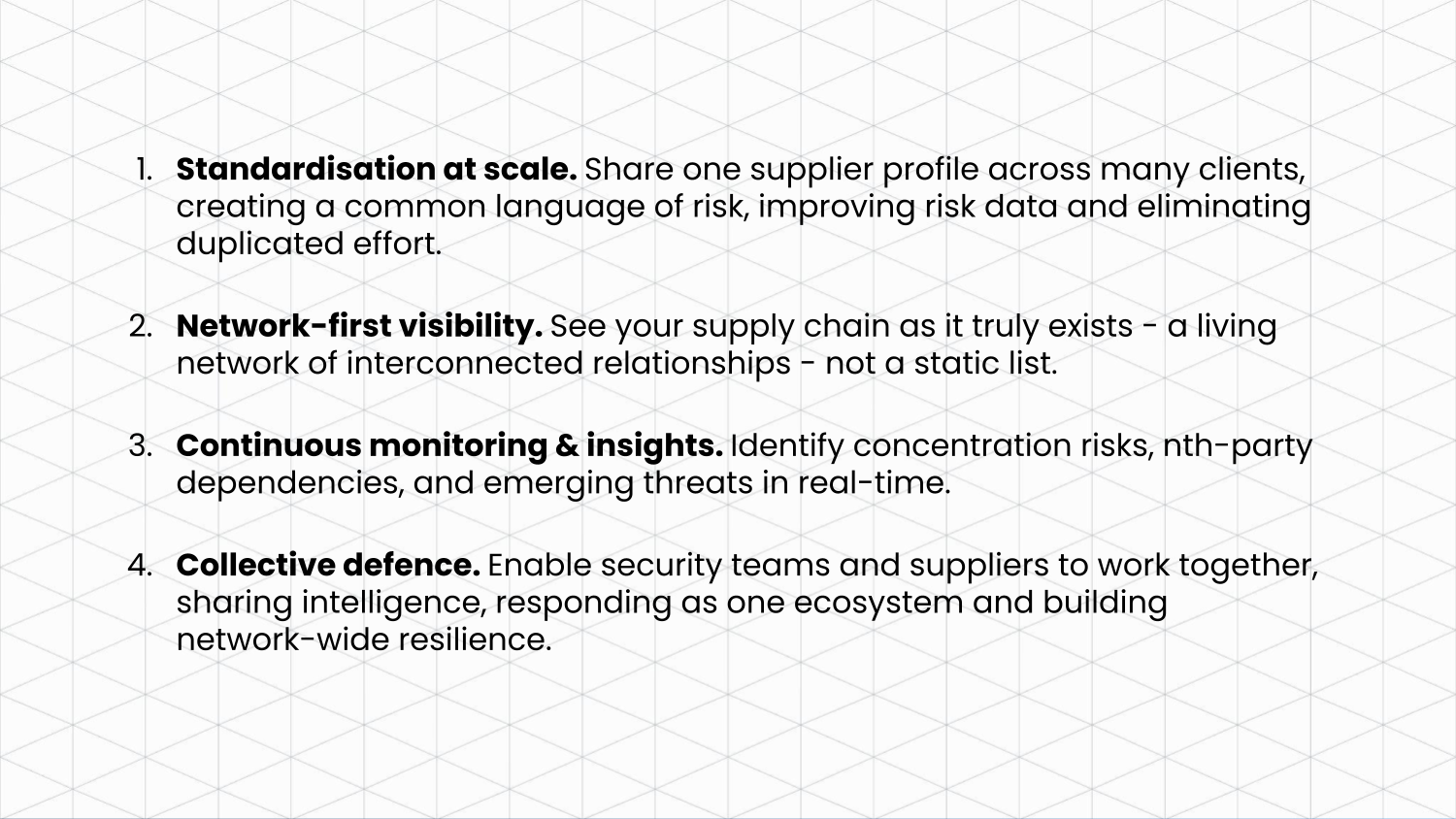
That’s why Active Supply Chain Security (ASCS) moves beyond traditional TPRM's static, siloed and compliance-focused approach to deliver:
Here’s how you can put ASCS into practice at your organisation and across your network.
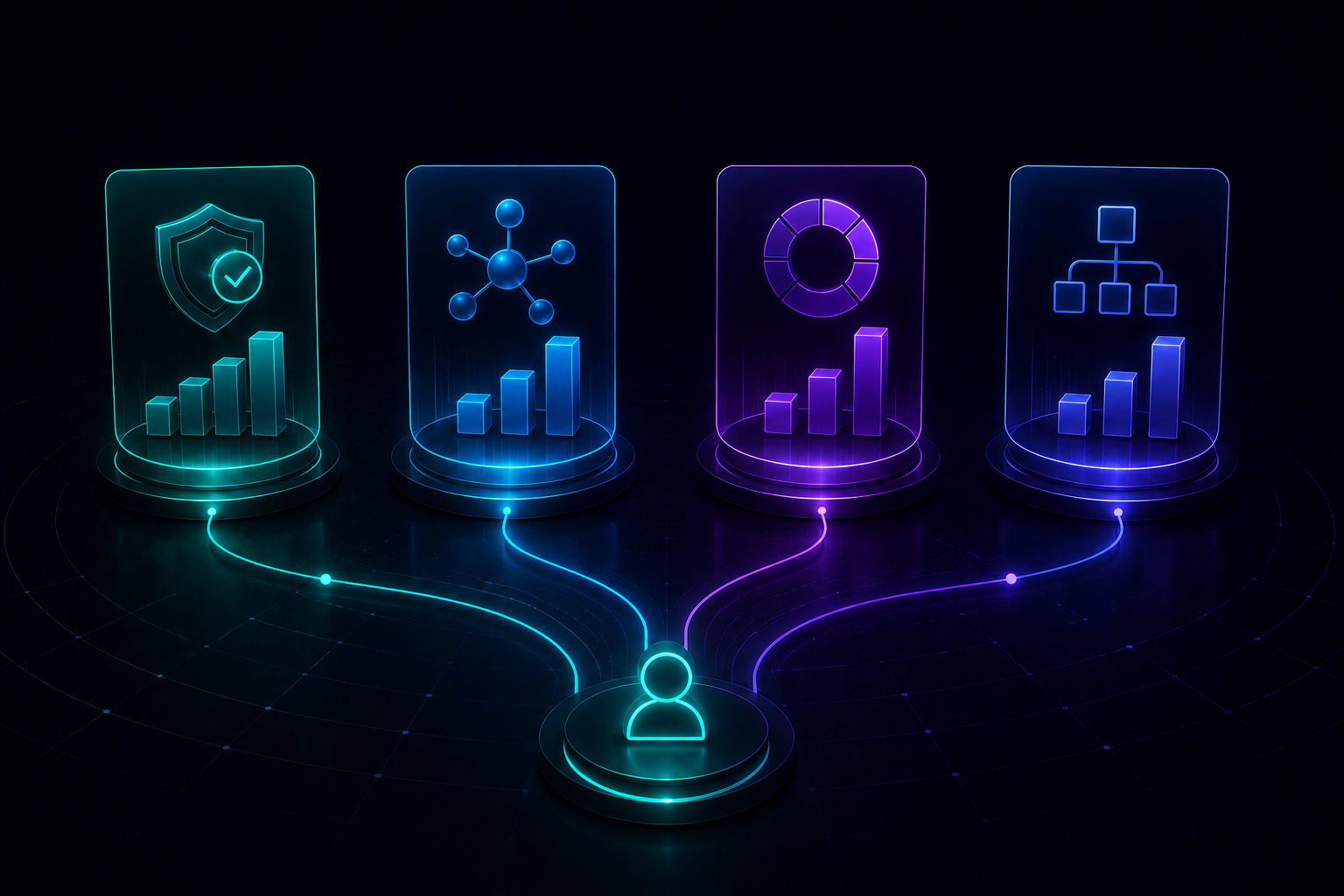
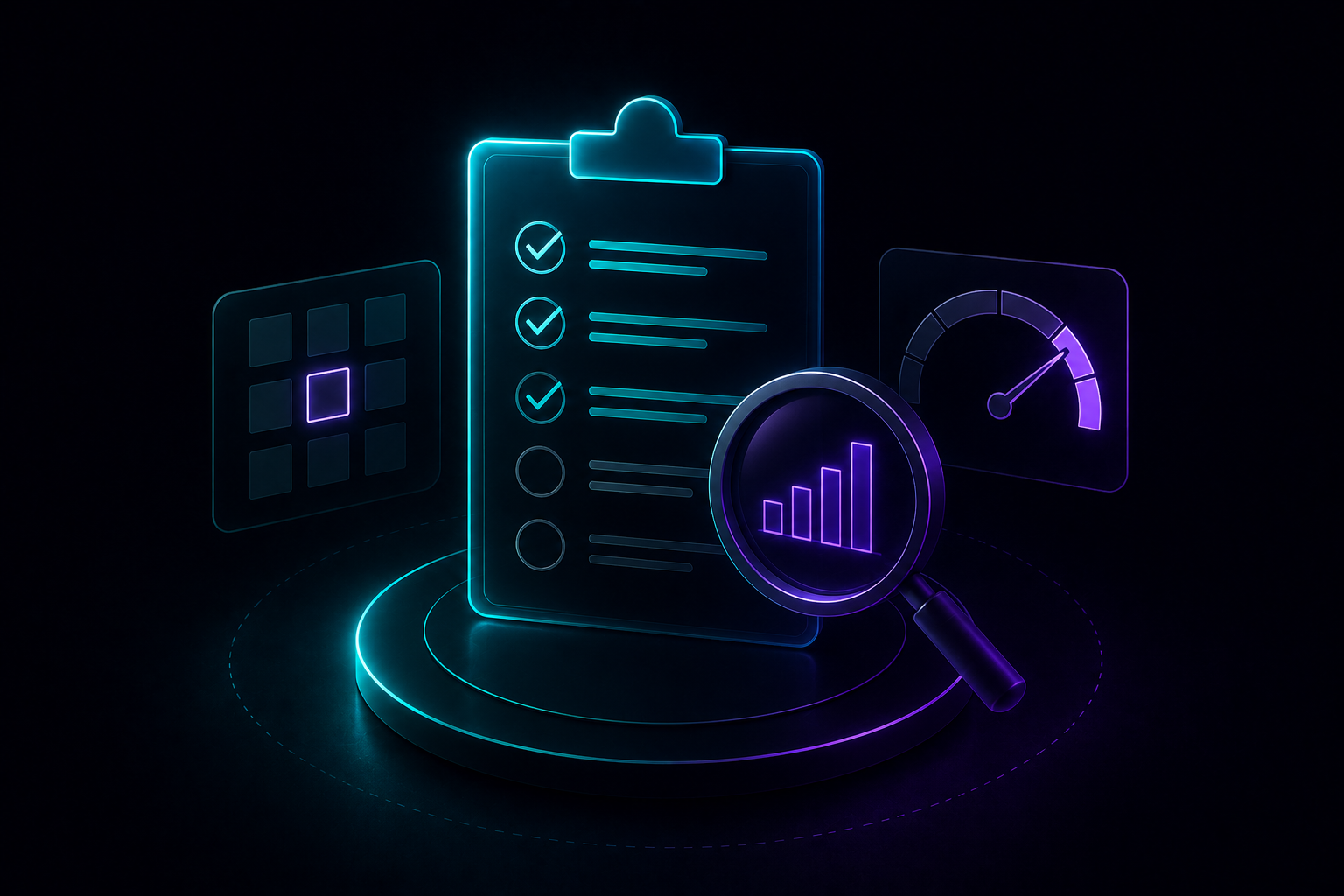
Roll out standardised security assessments aligned to key regulations for your industry and goals. At a base level, the assessment frameworks should be built on ISO 27002, the NIST Cybersecurity Framework, the NCSC Cyber Assessment Framework, and Cyber Essentials. You can then add on domains relevant to your organisation, such as ESG regulations or Financial Services standards (i.e. EU's DORA).
Deploy this assessment across existing and new suppliers. Suppliers will not only answer the questions in the same way, creating a common language of risk for simple reviews and compliance verification, but by maintaining one standardised security profile, your security team will also be able to constantly monitor their changing security profile without chasing.
The result for CISOs:
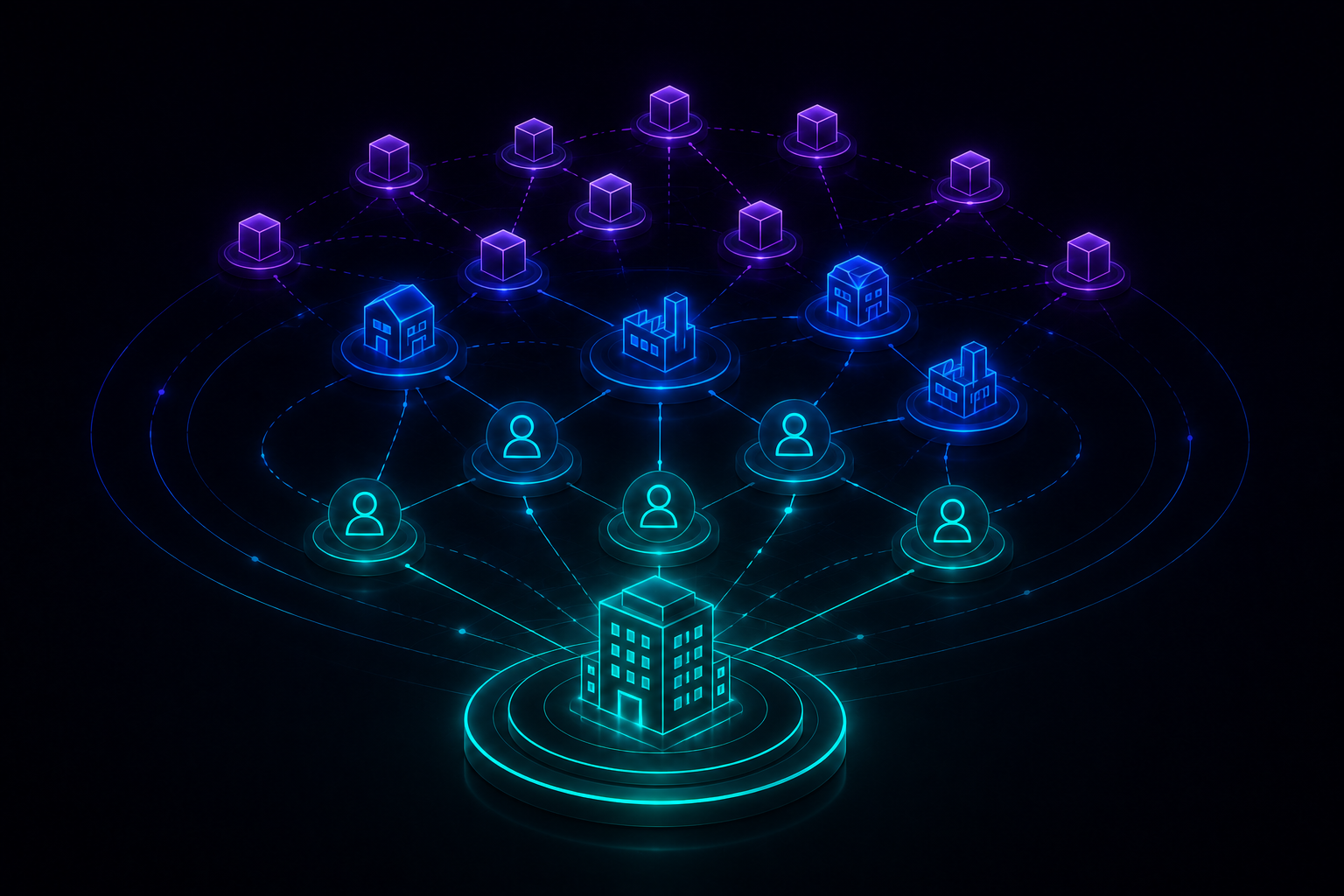
Map thousands of organisations onto a dynamic, non-linear supply chain network, which provides a bird’s eye view of your suppliers’ suppliers. By visualising your entire supply chain ecosystem beyond 3rd and 4th parties, you can identify concentration risks earlier and make risk-based decisions to mitigate sudden disruptions (i.e. sanctions, policy changes).
In addition, with the full picture of your nth tier connections, you can proactively uncover shared dependencies and take action to avoid cascading failures before they happen.
The result for CISOs:
Overlay the network map with proactive threat management tools. With an expanding database of suppliers as your foundation, you can add detection, monitoring and mitigation tools on top, which enable your security team to respond before any damage is done.
For instance, real-time risk alerts, intuitive dashboards and simulated disruptions enable you to assess the impact of potential threats, create solid response playbooks and make informed choices around supplier diversification.
The result for CISOs:
Create a connected community of clients and suppliers, enabling you to seamlessly share intelligence with network partners and reduce systemic risk across the ecosystem. From large enterprises to obscure nth party suppliers, enabling ecosystem partners to collaborate and communicate on a shared platform is essential to responsive threat mitigation and coordinated remediation actions.
What’s more, with organisations and suppliers working together, you optimise the entire ecosystem's resources and ensure every link in the chain is fortified.
The result for CISOs:
Risk Ledger is leading the shift to Active Supply Chain Security. By standardising supplier data, connecting thousands of organisations onto a living network, and overlaying proactive threat intelligence, our four-stage approach is helping organisations move beyond fragmented TPRM toward a more connected and continuous supply chain security model.
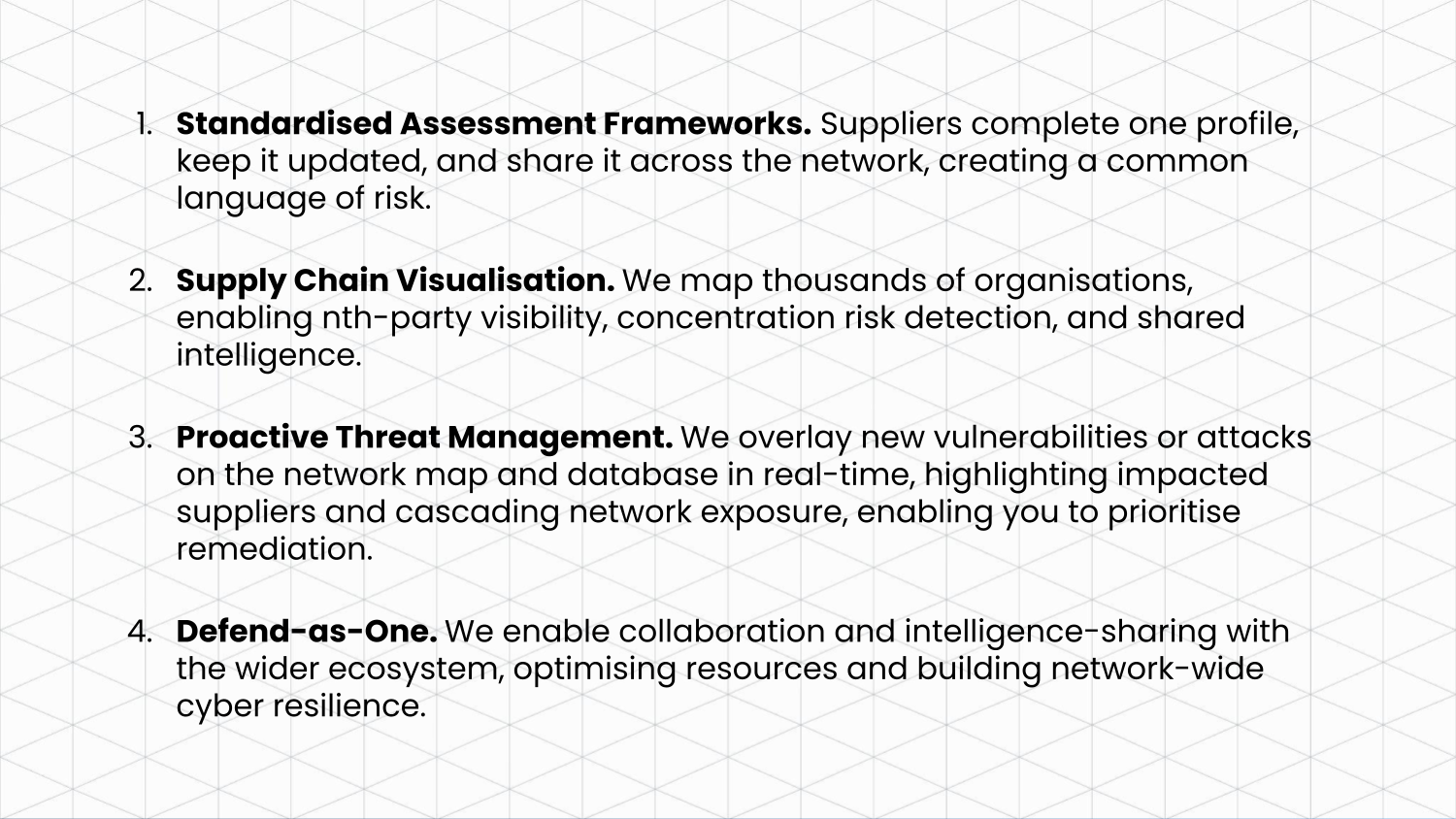
Together, these capabilities form the foundation for organisations progressing toward Active Supply Chain Security — continuous visibility, systemic risk reduction, and collaborative defence across Financial Services, Critical National Infrastructure and the Public Sector. Because in today's interconnected world, every link matters.

Monthly research, case studies and practical guides you won't find anywhere else.
Join thousands of security managers turning their TPRM programmes into success stories.


.svg)