August 27, 2026
・
6
mins read
.png)

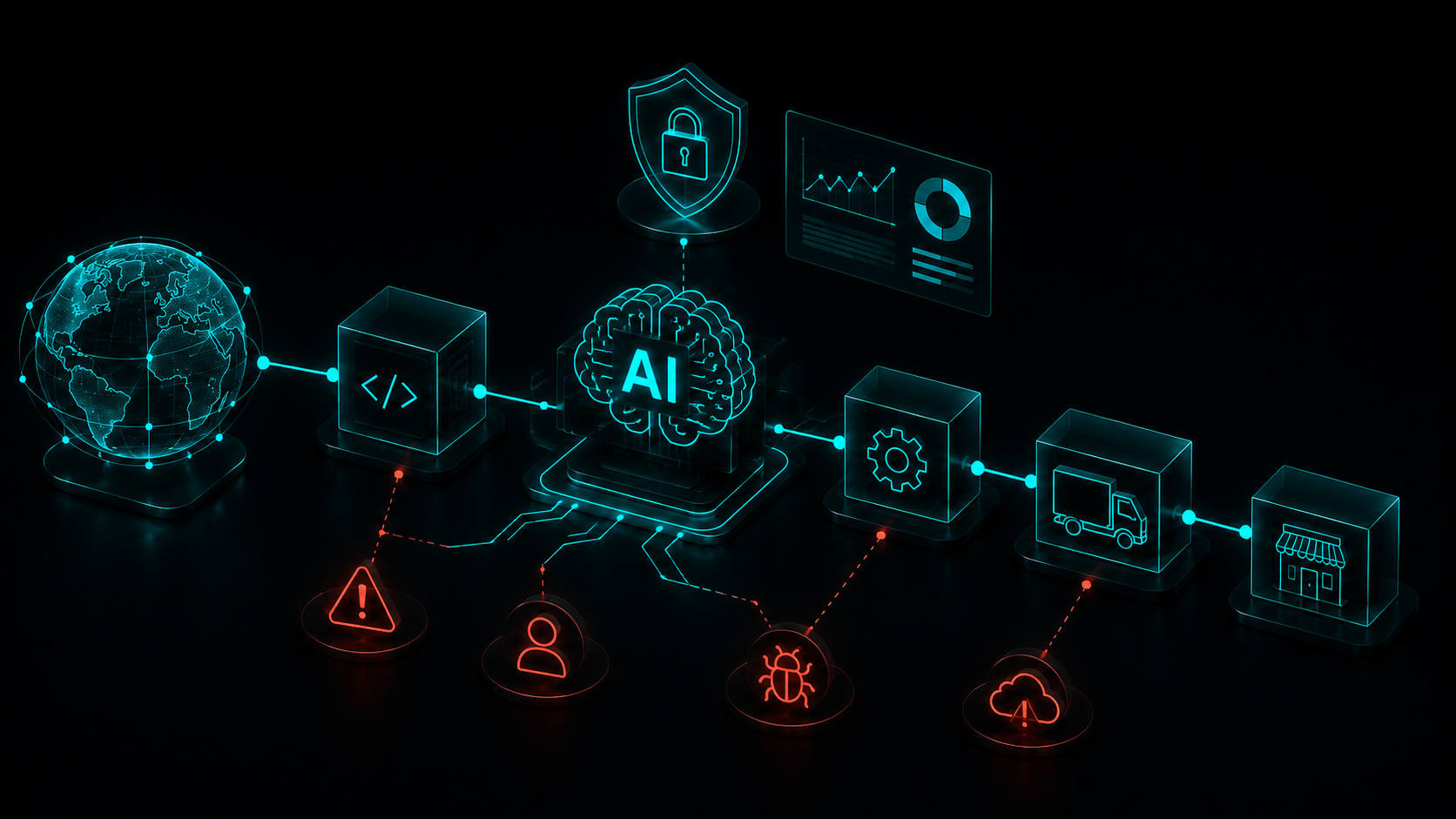
Supply chain breaches are on the rise. AI-powered attackers are exploiting obscure nth-party vulnerabilities. Your organisation's security leader is looking to you for answers.
What do you tell them – and what evidence do you rely on?
In 2025, 85% of UK cyber security professionals experienced a digital supply chain security incident and 90% now consider supply chain security a leading concern. But outdated third-party risk management (TPRM) processes are limiting security analysts’ ability to uncover, monitor and mitigate today’s supply chain security risks.
TPRM was created for a simpler world where suppliers were isolated entities and compliance was the primary objective. But today’s interconnected supply chains require continuous and coordinated defence, not static and siloed point-solutions.
From Cyber and IT Risk Analysts to InfoSec and Data Protection Managers, cyber security professionals are being held back by traditional TPRM software’s lack of supply chain visibility, continuous monitoring and partner collaboration.
To effectively analyse and combat modern cyber security risks, they require a supply chain security approach that:
In other words, security analysts need to move beyond outdated TPRM processes toward Active Supply Chain Security (ASCS).
Active Supply Chain Security represents the evolution of TPRM for the modern era. It is not a feature upgrade to traditional assurance tools, but a new operating model for supply chain security, built on continuous visibility, shared intelligence, and systemic risk reduction across an interconnected ecosystem.
The result? Security analysts swap tedious and manual supplier assessments for what they do best: proactively mitigating actual risks and effectively strengthening organisational resilience.
Are you stuck in a never-ending review cycle?
Traditional third-party risk management (TPRM) processes typically involve endless questionnaires, periodic assessments, and unworkable risk scoring to assess risks posed by external suppliers. But this TPRM model no longer delivers the tools you need for today’s interconnected landscape.
In 2025, our Every Link Matters report found that TPRM was severely lacking for cyber security professionals. In particular:
In short: TPRM isn’t failing you due to lack of effort - it’s failing you because it was built for compliance in a disconnected world, not resilience in a connected one.
Here’s five ways that traditional TPRM is holding you back.
1. Point-in-time assessments can’t keep up with real-time threats
A supplier’s security posture is fluid, not static. A questionnaire submitted on Monday can be irrelevant by Tuesday, so relying on annual assessments leaves you blind to real threats for 364 days of the year. What’s more, static assessments do not notify you when a supplier’s risk profile changes, so you only discover a weakness after it’s been exploited.
2. Manual questionnaires waste time and generate incomparable data
72% of organisations still rely on spreadsheets to manage their TPRM programme. Without a standardised and automated assessment process, you end up constantly reviewing questionnaires and chasing suppliers instead of actually focusing on supply chain threats. This non-stop back-and-forth not only wastes your time, but also leads to rushed, fragmented and error-filled supplier answers, which makes it impossible to accurately assess risk levels across a diverse supply chain and slows down supplier onboarding.
3.Check-box compliance drains resources without reducing risk
TPRM delivers ‘Compliance Theatre’. It’s a box-ticking performance to show regulators you’re ‘reducing risk’ rather than genuine defence. As suppliers can be 100% compliant with a specific framework and still be catastrophically vulnerable to a modern attack, this compliance-first TPRM mindset creates an unwanted imbalance in your workload: maximum assessment effort for minimal security reward.
4. Nth party and concentration risks remain completely invisible
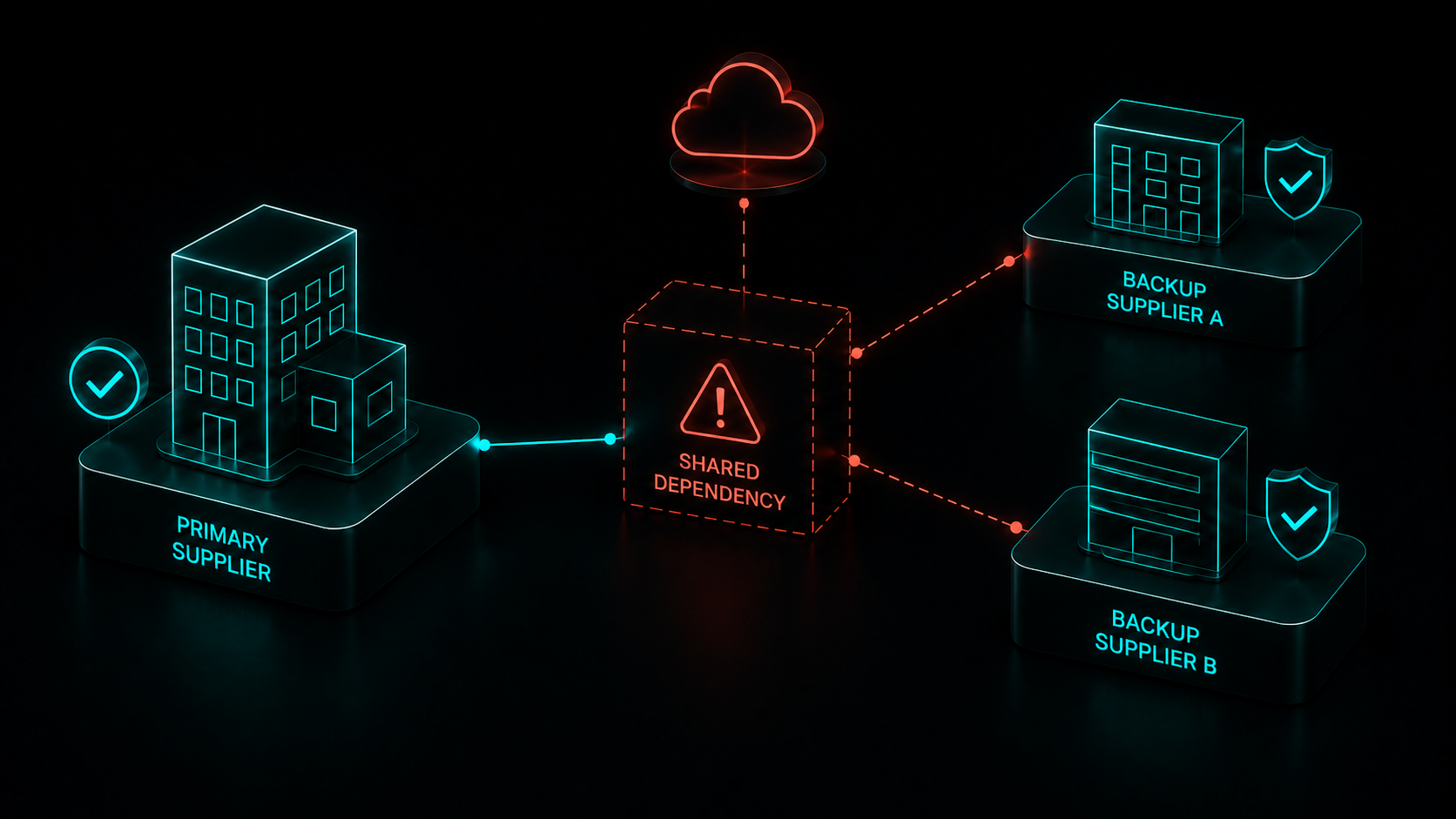
In a modern, hyper-connected economy, your organisation’s security is only as strong as an obscure company deep in your supply chain. But TPRM only vets your direct third-party relationships, ignoring the vast, invisible web of 4th, 5th, and nth parties that those suppliers rely on. These unseen nth party vulnerabilities and unidentified concentration risks (i.e. suppliers relying on the same data storage provider) leave you unprepared for cascading supply chain disruptions and firefighting problems that could have been avoided with proactive mitigation.
70% of organisations cannot currently identify concentration risks.
5. Fragmented approach to a shared threat
With traditional TPRM, there’s another security analyst, in another organisation, trying to solve the exact same problem as you, at the exact same time, but in total isolation. This self-protection model not only leads to wasted effort, but fails to recognise that a weakness anywhere in the ecosystem eventually becomes a threat to everyone. Then, when a security incident does occur, TPRM’s lack of collaboration and shared intelligence prevents successful mitigation and containment.
Active Supply Chain Security is not:
Active Supply Chain Security is a continuous, network-first supply chain security model that connects organisations and suppliers into a living ecosystem of shared visibility and collective defence.
Just as cloud-based collaboration requires distributed security models, today’s interconnected supply chains require collective, coordinated network defence. It’s no longer enough to treat suppliers bilaterally - you need a more coordinated and ecosystem-wide approach to managing supply chain risk.
That’s why Active Supply Chain Security (ASCS) moves beyond traditional TPRM's static, siloed and compliance-focused approach to deliver:
Here’s the breakdown of each element in more detail.
1. Standardising security assessments
ScotRail cut supplier onboarding time by 54%
2. Visualising the supplier network
70% of organisations cannot currently identify concentration risks.
3. Continuously identifying threats
Less than 50% of organisations monitor risks beyond their direct, third-party relationships
4. Collectively defending the ecosystem
Reviewing endless assessments is not the best use of your time. It’s not why you were hired, it’s not the value you can deliver, yet it takes up a huge part of your day-to-day and keeps your security leaders up at night.
Relying on outdated TPRM processes:
But Active Supply Chain Security turns the ‘unmanageable’ into the ‘unthinkable’: a cyber security framework that bolsters resilience and delivers tangible benefits to security analysts.
1. Streamline supplier assessment reviews — with no manual effort
No more supplier rejection. No more chasing responses. No more onboarding bottlenecks. Instead of completing endless repetitive questionnaires, your suppliers fill out, maintain and update just one security profile, which means no more tedious reviews on your part. What’s more, as most of your suppliers are already on the network with completed profiles, you can connect and start assessing suppliers immediately with pre-built workflows and processes, reducing onboarding time by over 50%.
2. Access continuously-updated supplier data — without chasing
With suppliers maintaining live security profiles across all client relationships, you receive continuously updated and higher-quality security data. In addition, you get automated alerts each time their security posture changes without the need to manually chase them. This not only cuts out mundane and monotonous work from your day-to-day, but enables you to skip the back-and-forth with suppliers and deliver more actionable insights than static questionnaires to your security leader.
3. See your entire supply chain network — at-a-glance
Say goodbye to linear spreadsheet-based lists of suppliers. By mapping your 3rd, 4th, and nth-party dependencies on a living network, you easily uncover hidden concentration risks and systemic vulnerabilities that traditional tools miss. By shining a light on changing nth-party connections, you also easily understand how disruptions cascade through your ecosystem and can make informed, risk-based decisions to mitigate threats.
4. Demonstrate superior supply chain risk management with network-level insights
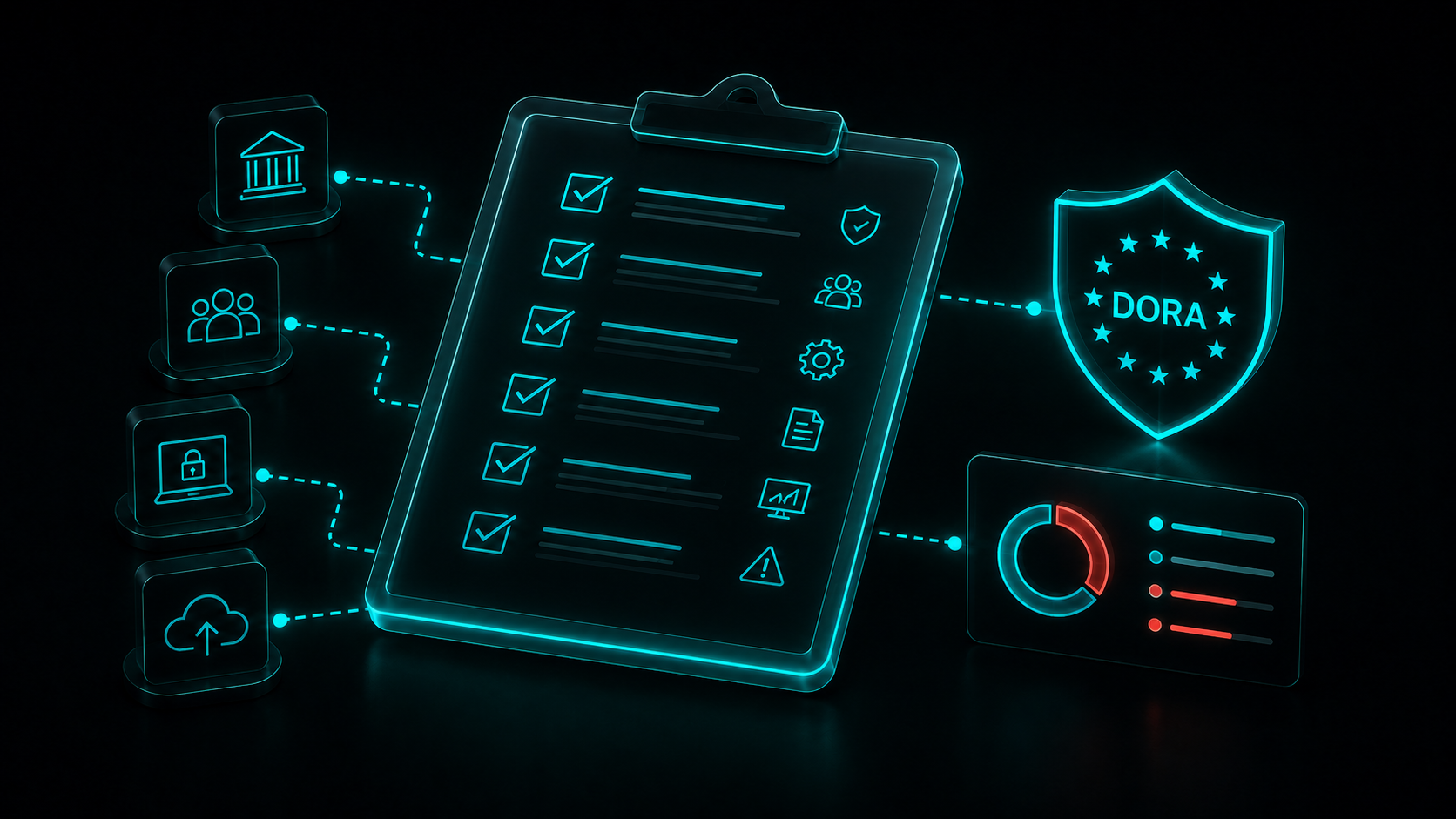
With standardised frameworks aligned to regulations, controls relevant to your organisation (i.e. ESG), network-level insights and compelling visualisation, you can easily demonstrate to security leaders and regulators that you're ahead of systemic risks, not just ticking compliance boxes. Meanwhile, by learning about emerging threats from community signals and gathering intelligence insights from other security analysts in the network, you can provide detailed security intel that far surpasses what traditional one-to-one supplier assessments deliver.
5. Detect and respond to emerging threats proactively
See risks others can’t. By overlaying live threat intelligence across your supplier ecosystem, you quickly identify which suppliers are potentially impacted, understand exposure pathways, and can prioritise remediation efforts. What’s more, real-time security updates enable you to identify supplier exposure (and cascading risks) earlier than traditional tools allow, so you know now what's happening before your suppliers tell you and can proactively mitigate threats with other community partners.
1. Security is a bottleneck when onboarding suppliers
Are you reviewing endless security assessments and constantly asking suppliers the same questions when onboarding new suppliers?
Non-standardised assessments lead to duplicated effort, incomparable security data and onboarding delays. But with ASCS’ standardised and centralised supplier assessment processes, you can create a common language of risk, easily compare suppliers’ security postures, rapidly verify supplier statements and accelerate supplier onboarding — at scale.
Signs you need ASCS
❌ Spreadsheet-based questionnaires for new suppliers
❌ Inconsistent supplier responses
❌ Incomparable security data
2. Supplier security assessments are updated periodically
Are you relying on third-party suppliers updating their security assessments every 6-12 months?
Long gaps between assessments deliver quickly-outdated security data, leaving you on the back foot for the majority of the year. But with ASCS, your suppliers constantly update one security profile, so you receive real-time alerts to changes in their security posture, identify risks proactively and can plan remediation efforts for emerging threats before it’s too late.
Signs you need ASCS
❌ Point-in-time assessments
❌ Chasing suppliers to update their security profiles
❌ Outdated security questions not aligned to new regulations
3. Cannot see your supply chain connections beyond 3rd or 4th parties
Are you basing your entire supply chain security on the security postures of your contracted Tier 1 suppliers?
Focusing on third-party suppliers leaves you blind to network concentration risks and exposed to nth-party vulnerabilities cascading through the ecosystem. But with ASCS, map your supplier ecosystem as it truly exists to uncover your hidden nth-party dependencies, track changing supplier relationships, and identify concentration risks shared between your suppliers — at-a-glance.
Signs you need ASCS
❌ Can’t name your suppliers’ suppliers
❌ Unaware of ecosystem concentration risks
❌ Not tracking suppliers’ changing connections
4. Reactive and independent firefighting to third-party breaches
Are you finding out about supply chain breaches from third parties and only initiating defence mechanisms after attacks have occurred?
Waiting to find out about breaches from impacted suppliers is already too late. But with ASCS’ continuous alerts and proactive threat management, you get immediate visibility into which suppliers are exposed, how vulnerabilities cascade through your ecosystem and where to prioritise action.
Signs you need ASCS
❌ No coordinated plan with supply chain partners for breaches
❌ Not sharing security intelligence with partners
❌ Waiting until threats reach your door to take action
5. Satisfying compliance regulations but still suffering breaches
Are your suppliers 100% compliant with industry regulations, but you’re still learning about breaches in the supply chain?
Even if you’re manually updating your security questionnaire for new regulations, point-in-time compliance audits do not offer sufficient protection for today's rapidly evolving supply chain threats. But with ASCS, you can continually detect real-time threats, free up your security team to remediate emerging risks, and streamline compliance reporting with up-to-date data.
Signs you need ASCS
❌ Equating compliance with adequate protection
❌ Using outdated data for reporting
❌ Manually updating assessments when regulations change
Any sector with vast interconnected supplier networks can suffer from nth party and concentration vulnerabilities. But if you work in an industry that is heavily-regulated and highly-prized by cyberattackers - such as Financial Services, Critical National Infrastructure (CNI) and the Public Sector - then traditional TPRM is leaving you dangerously exposed.
Financial Services
Critical National Infrastructure
Public Sector
In 2018, Risk Ledger pioneered the network-first approach to supply chain security. Now, we’re leading the shift to Active Supply Chain Security.
By standardising supplier data, connecting thousands of organisations onto a living network, and overlaying proactive threat intelligence, our four-stage approach is helping organisations move beyond fragmented TPRM toward a more connected and continuous supply chain security model.
Together, these capabilities form the foundation for organisations progressing toward Active Supply Chain Security — continuous visibility, systemic risk reduction, and collaborative defence across Financial Services, Critical National Infrastructure and the Public Sector. Because in today's interconnected world, every link matters.
Synectics Solutions is a leading provider of fraud prevention and risk intelligence solutions, trusted by over 160 organisations across financial services and government as their first line of defence.
Challenge: Synectics Solutions’ was relying on a laborious, manual TPRM process - based on customised questionnaires and spreadsheets - which was time-consuming and unscalable.
Solution: Risk Ledger's platform enabled Synectic’s compliance team to automate supplier assessments, standardise due diligence, and constantly monitor changing supplier profiles, while also delivering far-reaching visibility over their extended supply chain.
Result:
“I’d estimate that we spend less than half the time to onboard a new supplier using Risk Ledger than using previous processes.” Steve Sands, Information Security Consultant and Data Protection Officer, Synectics Solutions
For security analysts in highly-regulated and targeted industries, Active Supply Chain Security is not an optional TPRM upgrade. It’s the difference between monotonous and time-consuming review cycles and industry-leading supply chain risk mitigation.
To protect against today’s supply chain threats, make sure you are:
In today’s interconnected world, security is no longer an individual effort. It requires organisations and suppliers to Defend-as-One — strengthening every link across the ecosystem.
Cyber security approaches evolve with the digital threat landscape.
Zero Trust Architectures now protect cloud-connected IoT devices. Endpoint Protection Platforms (EPP) combats today’s rapidly evolving zero-day threats. Active Supply Chain Security enables today's interconnected supply chains to defend-as-one.
Find out how other security analysts are enhancing their supply chain security processes with ASCS.


Monthly research, case studies and practical guides you won't find anywhere else.
Join thousands of security managers turning their TPRM programmes into success stories.

.svg)